
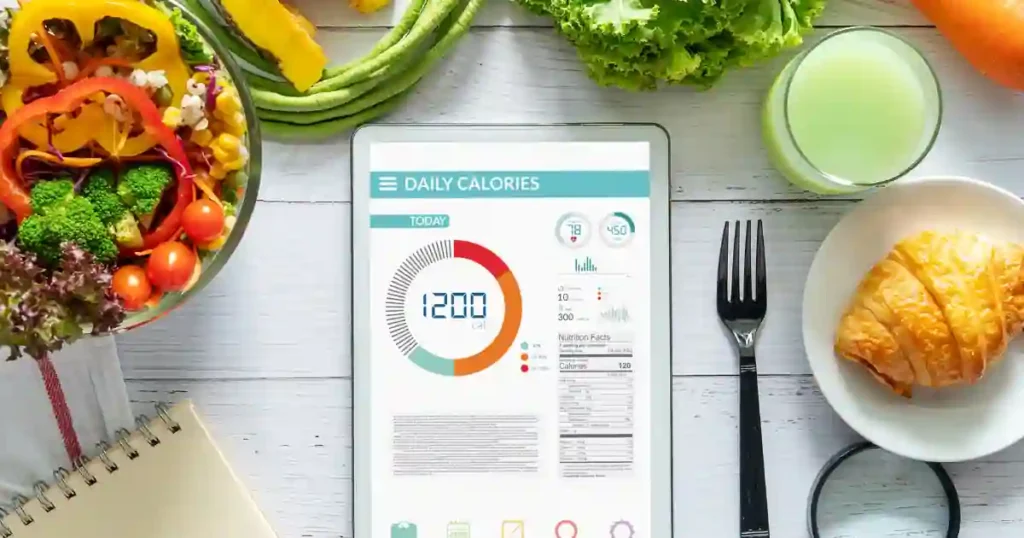
Tracking food and still not seeing results? That frustration is something I know personally, and it comes down to one core issue, why calorie estimates fail is something almost nobody talks about honestly. Living in a place like Waimea, Hawaii, where fresh, wholesome food is everywhere, I still ran into the same wall most people hit: the numbers looked right, but the results didn’t match. This guide breaks down every reason your calorie math goes wrong and gives you a clear, simple system to fix it fast.
What Are Calorie Estimates and Why We Use Them
Calorie estimates are tools. They are not exact measurements. Most people treat them like hard facts, and that is exactly where the trouble starts.
Definition of Calorie Estimates
A calorie estimate is an approximate value for either food intake or energy expenditure. It gives you a working number to guide your decisions. It is never a perfect reading.
Food has natural variation. Your body changes daily. So every number you see, on a label, in an app, on a treadmill screen, is an educated guess based on averages.
Where Estimates Come From
Calorie data comes from a few key sources:
- Food labels, which follow government-approved testing methods
- Nutritional databases, used by apps and dietitians
- Fitness trackers, which use algorithms based on movement and heart rate
Each source has its own margin of error. When you stack them together, those errors add up quickly.
Why Estimates Are Necessary
Exact calorie measurement in everyday life is nearly impossible. Scientists use bomb calorimetry in labs to get precise values. You can’t do that at home. So we rely on estimates, and that is perfectly fine, as long as we remember what they are.
The real goal is to use these numbers as directional guides, not as hard truths. Once I understood that, everything clicked.
The Core Problem: Estimates vs. Reality
The biggest issue isn’t that estimates exist. The issue is that we treat them as exact. That single mental error causes most tracking failures.
Human Biology Is Variable
No two people burn energy the same way. Research from the National Institutes of Health confirms that energy expenditure varies significantly between individuals, even when age, weight, and activity level look the same on paper.
Your gut microbiome, hormones, sleep quality, and stress levels all affect how many calories your body actually uses. These factors don’t show up in any formula.
Food Isn’t Standardized
A chicken breast from one farm is not identical to one from another. Cooking method changes calorie content. Ripeness of fruit changes sugar density. Food is biological, and biology doesn’t follow neat labels.
Daily Life Changes Constantly
Your calorie needs on a rest day are different from your needs on a high-activity day. Temperature, hydration, illness, and sleep all shift your energy burn. A static daily target can’t fully account for that kind of constant change.
Food Label Inaccuracies Explained
Food labels are helpful. But they are not perfectly accurate. This is one of the most common and least discussed reasons why calorie estimates fail.
Allowed Error Margins
The FDA allows food manufacturers a margin of error of up to 20% on calorie labels. That means a product listed at 300 calories could legally contain anywhere from 240 to 360 calories. Most people have no idea that gap exists.
Rounding of Calories
Labels round calorie counts. A food with 94 calories may be listed as 90. A food with 146 calories may appear as 150. Individually, these gaps seem small. Over a full day of eating, they can add up to 100 to 200 extra calories that you never counted.
Portion Size Confusion
Serving sizes on labels don’t always match what you actually eat. A “serving” of peanut butter might be one tablespoon, but most people spread two or three. A “serving” of chips might be 15 pieces, but the bag usually goes much further.
| Food Item | Label Calories | Possible Actual Range |
|---|---|---|
| Snack bar | 200 | 180–240 |
| Peanut butter | 190 | 170–220 |
| Packaged meal | 400 | 350–480 |
Registered dietitians consistently point out that even small labeling gaps compound over time. Knowing this helps you account for the gap instead of being blindsided by it.
Portion Size Estimation Errors
This is one of the biggest reasons why calorie estimates fail in real life. Portion misjudgment silently wrecks the most disciplined tracking efforts.
Eyeballing vs. Measuring
Studies show that people underestimate portion sizes by 20 to 40 percent when eyeballing. Even trained nutrition professionals make these mistakes. The hand-sized chicken breast you log might be 6 ounces. The actual serving on your plate might be 10 ounces.
That difference alone can add 150 to 200 calories in one meal.
Restaurant Portions
Restaurant servings are often two to three times larger than a standard serving size. A plate of pasta at a sit-down restaurant can contain 1,000 to 1,200 calories, while the same dish logged in an app might reflect 500 calories for a typical serving.
Eating out two or three times a week can quietly add hundreds of calories beyond what your tracker shows.
Cultural Eating Habits
In many households and communities, food is served family style with no defined portions. What feels like a “normal” amount is shaped by years of habit. A “small” bowl at home may be double what a nutrition label considers one serving.
Real-Life Scenario: The Invisible Calories
Picture a Friday night after a long week. Dinner is logged. The numbers look fine.
But here is what gets missed:
- Two tablespoons of olive oil used in cooking: 240 calories
- A small handful of mixed nuts while watching TV: 170 calories
- A glass of juice with dinner: 120 calories
- A few bites of leftover dessert: 80 calories
Individually, none of these feel significant. Together, that’s over 600 calories that never made it into the tracker. That single evening can erase a three-day calorie deficit.
This is exactly how why calorie estimates fail becomes a lived experience rather than just a concept. The math isn’t wrong. The logging is incomplete.
Why Tracking Apps Aren’t Perfect
Apps are some of the most useful tools available for managing food intake. But they rely entirely on user input, and that creates several layers of inaccuracy.
Database Variations
A single food item like “brown rice” can have dozens of entries in an app’s database, each with slightly different calorie counts submitted by different users or pulled from different sources. Choosing the wrong entry by even 50 calories, repeated across three meals, adds up.
User-Generated Entries
Many popular apps allow users to submit their own food data. Some of those entries are incorrect. Others are for different portion sizes than the label states. When you search for a packaged food and select a user-submitted entry, you may be working with flawed numbers.
Apps like MyFitnessPal and Cronometer are powerful tools. They are not guarantees of accuracy.
Inconsistent Logging
Skipping snacks. Forgetting drinks. Guessing instead of measuring. Logging dinner but not the bites taken while cooking. These small gaps happen every day for most people.
Consistency matters more than precision in the long run. A person who logs 85 percent of their food every single day for a month has better actionable data than someone who logs 100 percent for two days and then gives up. Building the daily habit first, and refining accuracy second, is the right sequence.
| Common Mistake | Result |
|---|---|
| Skipping snacks | Underreporting by 150–300 calories |
| Guessing portions | Inaccuracy of 20–40% |
| Ignoring drinks | Hidden 100–300 calories |
| Logging inconsistently | Unreliable weekly data |
Fixing these habits improves your tracking reliability more than switching apps ever will.
Why Exercise Calories Are Overestimated
Burned calories are much harder to track accurately than eaten calories. This is a major source of confusion that worsens the problem of why calorie estimates fail.
Fitness Tracker Limitations
Wrist-worn fitness trackers estimate calorie burn using algorithms based on heart rate and movement. Research has found that many devices overestimate exercise calories by 20 to 90 percent depending on the activity type.
A workout logged as burning 500 calories may have actually burned 320.
Machine Overestimation
Cardio machines like treadmills and ellipticals are known to overestimate calorie burn. Without entering your personal data, and sometimes even with it, these machines inflate the numbers. Trusting machine readouts leads most people to eat back more calories than they actually burned.
Intensity Misjudgment
A light walk and a brisk walk at the same pace look identical on paper but burn different amounts. Effort level, terrain, fitness level, and body composition all affect actual calorie burn. Generic estimates can’t capture these differences.
Metabolism: The Hidden Variable
Metabolism is one of the biggest reasons calorie estimates fail, and it’s the factor most people overlook entirely.
Individual Differences
Two people of the same age, height, weight, and activity level can have metabolic rates that differ by 300 to 500 calories per day. That’s a significant gap that no standard formula can predict for any individual.
Using our Maintenance Calorie Calculator gives you a personalized baseline, but remember it is still a starting point. Real metabolic variation requires real-world tracking to dial in.
Adaptive Thermogenesis
When you reduce calories, your body adapts. It slows non-essential processes. And, it reduces movement efficiency. It conserves energy. This is called adaptive thermogenesis, and it is a primary reason weight loss plateaus happen even when someone hasn’t changed their diet.
The body is not passive. It fights back.
Hormonal Influences
Thyroid hormones, cortisol, insulin, and leptin all influence metabolism directly. Sleep deprivation raises cortisol. Chronic dieting affects leptin levels. These hormonal shifts change how many calories your body burns, and no food tracker accounts for them.
As researcher Kevin Hall has noted, energy expenditure varies widely between individuals even under similar conditions. This means your TDEE calculation is an estimate of an estimate.
Why Calorie Needs Change Over Time
Your body doesn’t stay static. Your calorie needs shift as your body changes. Ignoring this is a core reason why calorie estimates fail over time.
Weight Loss Changes Needs
When you lose weight, your body is smaller. A smaller body burns fewer calories at rest and during activity. If you started your diet with a 2,000-calorie target at 180 pounds, that same target becomes a maintenance or even surplus at 155 pounds. Recalculating regularly matters.
You can use our Total Daily Energy Expenditure (TDEE) Calculator to update your numbers as your weight changes.
Muscle Gain Increases Needs
Lean muscle tissue is metabolically active. Every pound of muscle you gain slightly increases your resting calorie burn. If you are strength training consistently, your calorie needs grow over time. Sticking to your original estimate leads to under-eating.
Lifestyle Shifts
A new job, a change in schedule, a new exercise routine, or even a change in season can shift your daily calorie needs by hundreds of calories. The estimate you set in January may not serve you well by July.
Psychological Factors That Affect Accuracy
Sometimes the problem with calorie estimates isn’t the math. It’s the behavior around the math.
Underreporting Food Intake
Research consistently shows that people underreport their food intake by 20 to 40 percent on average. This happens even when people are trying to be honest and accurate. Memory is imperfect. Estimation is biased.
People tend to remember salads but forget the dressing. They remember the grilled fish but forget the butter it was cooked in.
Forgetting Small Bites
A bite here, a taste there. The spoonful of peanut butter while making lunch. The last few fries from a friend’s plate. These “invisible calories” are real calories. They don’t make it into most logs.
Emotional Eating
Stress, boredom, and social pressure all trigger eating outside of planned meals. These episodes are often the hardest to log accurately because they happen quickly, feel outside the “system,” and carry emotional weight. Yet they can represent 200 to 500 unlogged calories in a single sitting.
The solution is not to eliminate emotional eating entirely. It is to recognize when it happens and log it without judgment. Awareness is the first and most important step. Even an imperfect log is better than a blank one.
The “Healthy Food” Trap
One of the sneakiest reasons why calorie estimates fail is the assumption that healthy food equals low-calorie food. That is simply not true.
Calorie-Dense Healthy Foods
Some of the most nutritious foods are also among the most calorie-dense. Nuts, seeds, oils, avocados, and whole grains are excellent for health. But they require careful measurement.
Overeating Nutritious Foods
Because healthy foods feel “safe,” people tend to eat larger amounts without guilt. An extra pour of olive oil, a generous avocado slice, or a second handful of almonds adds up quickly without feeling like overconsumption.
Misleading Health Labels
Words like “natural,” “clean,” “organic,” and “superfood” have no calorie implication. A superfood granola can contain 400 calories per cup. An “all-natural” protein bar can carry 300 calories. Labels designed to signal health do not signal calorie count.
| Food | Typical Calories |
|---|---|
| Almonds (1 handful, ~28g) | ~160 |
| Avocado (medium) | ~240 |
| Olive oil (1 tbsp) | ~120 |
| Granola (1 cup) | ~400 |
Experts regularly flag these foods for being easy to overconsume. Awareness makes the difference.
Expert Advice from a U.S. Nutrition Professional
Nutrition researcher Alan Aragon puts it plainly: calorie tracking is an estimate of an estimate. Use it as a guide, not as an absolute.
That framing is liberating. It removes the pressure of perfection and redirects focus to what actually matters.
Focus on Trends
A single day’s log tells you almost nothing. A week of consistent logs tells you a lot. A month of data tells you the full story. Zoom out. Look at patterns. Are your weekly averages moving in the right direction? That matters far more than any single day.
When I started tracking weekly averages instead of daily numbers, the noise disappeared. I stopped panicking over a Tuesday spike and started seeing the actual direction my plan was taking me. That shift in perspective changed everything about how I approached nutrition.
Avoid Perfectionism
The pursuit of perfect calorie counts causes people to quit tracking entirely when they miss a day or make an error. Imperfect, consistent tracking is exponentially more useful than occasional perfect tracking.
Progress does not require precision. It requires honesty and persistence. A tracker with 80 percent accuracy used every day beats a perfect tracker used twice a week.
How to Improve Calorie Estimate Accuracy
You don’t need perfection. You need better habits. Here are the three most impactful changes I made that actually moved the needle.
Use a Food Scale
A food scale is the single best investment for anyone serious about calorie tracking. Weighing food in grams removes guesswork entirely. Most people are shocked by how far their eyeballed portions were from reality.
A digital kitchen scale costs less than $15 and lasts for years. It is the cheapest accuracy upgrade available.
Track Consistently
Tracking six days a week consistently outperforms tracking perfectly for two days. Consistency gives you data. Data reveals patterns. Patterns tell you what to change.
Pair tracking with our Maintenance Calorie Calculator to keep your baseline accurate as your weight changes.
Include Everything
Log every bite, every drink, every cooking oil, every condiment. Not because it’s fun, but because the things we skip logging are usually the things adding up. Even a basic level of completeness produces dramatically better data than selective logging.
Practical System for Managing Estimates
Turn your estimates into a functional system. Here is the exact three-step process I use and recommend.
Step 1: Start With a Baseline
Use a reliable calculator to find your TDEE (Total Daily Energy Expenditure). This is your maintenance calorie number, the amount your body needs to stay at its current weight. Set your intake target based on your goal: subtract for fat loss, add for muscle gain.
Step 2: Track for Two to Three Weeks
Log food consistently for at least two full weeks. Don’t make changes during this window. You are collecting data, not optimizing yet. Weigh yourself daily and average the readings at the end of each week.
Step 3: Adjust Based on Results
If your weight is moving in the right direction, keep going. If it is not moving, adjust by 100 to 150 calories per day and repeat the cycle. This evidence-based approach removes guesswork and replaces it with personal data.
Weekly vs. Daily Tracking Perspective
Daily calorie numbers can mislead you. Weekly trends tell the truth.
Why Daily Fluctuations Happen
Water retention, sodium intake, carbohydrate changes, hormones, and digestive timing all affect your daily scale weight by 1 to 5 pounds. None of that is fat gain or fat loss. It is noise.
One high-calorie day does not undo a week of consistency. One low reading does not confirm progress. Daily data is too noisy to act on.
Importance of Weekly Averages
Taking a weekly average of your daily weights smooths out the noise. Comparing week-over-week averages gives you a clear signal of whether your calorie plan is working. This is the method most experienced coaches use.
Long-Term Patterns
Monthly trends show you the full picture. They reveal whether your adjustments are working, whether your metabolism has adapted, and whether you need a structured diet break or a calorie recalibration.
| Tracking Type | Primary Benefit |
|---|---|
| Daily | Immediate awareness and habit reinforcement |
| Weekly | Accurate trend analysis without daily noise |
| Monthly | Long-term progress and metabolic insight |
Experts consistently recommend focusing on weekly and monthly trends rather than isolated daily numbers.
Who Is Most Affected by Failing Estimates
Some groups experience calorie estimate failures more severely than others.
Beginners
People new to calorie tracking have the steepest learning curve. They often lack reference points for what accurate portions look like. They tend to underestimate high-calorie foods and overestimate how much they burned during exercise. Beginners benefit most from using a food scale from day one.
Starting with a clear maintenance baseline also helps beginners avoid setting an unrealistic calorie target right away. An overly aggressive deficit in the first few weeks often leads to fatigue, cravings, and dropout. Starting close to maintenance and then reducing gradually produces better long-term adherence.
People Dieting Long-Term
Long-term dieters face adaptive thermogenesis more severely. The longer the body has been in a calorie deficit, the more it adapts to conserve energy. Fixed calorie targets become less accurate over months of dieting. Regular recalibration is essential.
A structured diet break every eight to twelve weeks, eating at maintenance calories for one to two weeks, can partially reverse adaptive thermogenesis and make the next dieting phase more effective. This is not cheating. It is strategic recovery.
Busy Individuals
People with packed schedules eat on the go, skip meal prep, and make last-minute food choices. These conditions make consistent, accurate logging much harder. Busy people tend to underestimate restaurant meals and overestimate workout burns, a double gap that adds up fast.
Simple meal prepping two to three meals per week reduces this variable enormously. When you know exactly what is in your food because you made it yourself, logging becomes faster and more accurate. Batch cooking is one of the most underrated accuracy tools available.
Tools That Help Reduce Estimation Errors
Technology won’t solve the problem by itself. But the right tools make accuracy significantly easier to achieve.
Tracking Apps
Apps like Cronometer have verified nutritional databases with stricter quality control than general-purpose apps. Using a high-quality database reduces the risk of selecting inaccurate entries. Always cross-reference unfamiliar foods against multiple sources.
When using any app, prefer verified entries, marked with a checkmark or labeled as confirmed by the database, over user-submitted entries. This one habit alone can improve your calorie accuracy by 10 to 15 percent.
Smart Scales
Body composition scales that track weight, body fat percentage, and muscle mass over time give you better data for recalibrating your calorie targets. When you know your lean mass is changing, you know your maintenance calories are changing too.
Even a basic digital scale that logs daily weight and syncs to your phone gives you the weekly trend data you need to make smarter calorie adjustments. Pair the scale data with your food log and you have a complete feedback loop.
Measuring Tools
Measuring cups, tablespoon measures, and kitchen scales are the foundation of accurate logging. Use them especially for calorie-dense foods like oils, nut butters, grains, and cheeses. These are the foods most often logged by sight, and most often underestimated.
Once you measure regularly for a few weeks, your visual estimation skills improve dramatically. Many people find that after a month of consistent measuring, they can eyeball portions with much greater accuracy than when they started. The measuring phase is a training phase for your perception.
Final Thoughts on Why Calorie Estimates Fail
Calorie estimates don’t fail because they are useless. They fail because they are approximations used in an imperfect world, by imperfect people, with constantly changing biology.
The core reasons they fall apart come down to a few consistent themes: food labels have legal error margins, portions get misjudged, apps rely on incomplete input, exercise burns get overstated, and metabolism adapts in ways no formula fully captures.
There is also the human side of the equation. We forget bites. We trust fitness trackers that are off by 30 percent. When we start with a calorie target and never update it as our bodies change. Each of these individually is manageable. Together, they create a systematic gap between the numbers we think we are hitting and what is actually happening.
Understanding why calorie estimates fail does not mean abandoning the practice. Treat every number as a range, not a fixed point. Check your results every two weeks. Adjust when the data tells you to adjust. Build the habit of completeness in your logging, not perfection, but completeness.
The solution isn’t to track more obsessively. It’s to track more honestly and use real-world results as your primary feedback signal. Your body’s actual response, your weekly weight trend, your energy level, your strength in the gym, tells you more than any number on a screen.
Progress comes from consistent patterns, not perfect numbers. Use your estimates as a starting point, watch your results, and adjust. That loop, estimate, track, observe, adjust, is the only system that works reliably over time.
If you want to get your baseline right, start with a personalized maintenance calorie number at maintenancecaloriecalculator.us. From there, add consistency and honesty to your tracking, and the results will follow.
Final Recommendation
After years of working through the exact frustrations this article describes, my honest recommendation is simple: stop trying to make your calorie estimates perfect, and start making them consistent. Why calorie estimates fail is not a mystery once you understand the stacked layers of approximation involved in every number you see. Start with a solid baseline using the Maintenance Calorie Calculator and your TDEE, then track weekly trends rather than daily numbers. Invest in a food scale, log everything including cooking oils and drinks, and adjust your intake based on what your body actually does over two to three weeks. Calorie counting is a tool, and like any tool, it works best when you understand its limits. Use it with that understanding, and it will serve you well.
Fix the Gap: Why Calorie Estimates Fail
Math is a great start, but your body is unique. Learn why calorie estimates fail and how to fix them fast to see real results.
Most tools use average math for everyone. Your unique body may burn fuel faster or slower. This is the main reason why calorie estimates fail today.
Track your weight for two weeks and see the trend. If it stays the same, move your food count up or down. This is how to fix them fast with ease.
Yes, high stress can change how your body uses fuel. It can make you hold on to weight. This shows why calorie estimates fail during busy times.
Move more to boost your burn rate each day. Even a short walk helps the math work better for you. This is a top way how to fix them fast.
Labels are not always one hundred percent right. Some foods have more or less fuel than they say. This gap is why calorie estimates fail often.

Dr. Selim Yusuf, MD, PhD
Founder & Chief Medical Editor, Maintenance Calorie Calculator Expertise: Clinical Nutrition, Metabolic Health, and Exercise Physiology
Experience: 15+ Years of Practical & Clinical Experience
Dr. Selim Yusuf is a licensed physician, clinical research scientist, and dedicated metabolic health expert with over 15 years of practical experience diagnosing, managing, and treating health and nutritional issues. As the founder and chief medical editor of Maintenance Calorie Calculator, Dr. Yusuf combines a rigorous academic background with years of frontline clinical experience to provide evidence-based, highly accessible nutritional tools for the public.
Dr. Yusuf earned his Doctor of Medicine (MD) from the Johns Hopkins University School of Medicine, where he graduated with honors and developed a deep interest in preventive medicine and metabolic health disorders. Following his medical residency, he pursued advanced academic research, earning a PhD in Nutritional Sciences and Metabolism from Harvard University.
His academic and clinical training uniquely bridges the gap between complex biochemical pathways (how the human body extracts energy from food) and practical, everyday clinical care. Over the course of his 15-year career, he has authored multiple peer-reviewed research papers focusing on the management of obesity, metabolic adaptation during prolonged calorie restriction, and macronutrient optimization for lean mass preservation.
Before transitioning his focus to digital health utility platforms, Dr. Yusuf served as an administrative lead and consulting metabolic specialist within top-tier university medical centers. Beyond his institutional roles, he has worked extensively as an elite evidence-based fitness and metabolic coach, guiding hundreds of individuals, ranging from sedentary desk workers battling chronic metabolic slowdowns to competitive athletes looking to optimize body composition.
Throughout his 15 years of practice, Dr. Yusuf noticed a recurring barrier to sustainable patient success: the mathematical confusion surrounding daily nutrition. He observed that most individuals fail to reach their physical goals not from a lack of effort, but because they lack a precise biological baseline.