
San Francisco health officials issued an urgent public health warning following the city’s first fatal overdose tied to a semi-synthetic opioid known as dihydro-7-hydroxymirtragynine or MGM-15. The substance, which is derived from kratom and marketed in gas stations and smoke shops, is estimated to be up to 50 times more potent than morphine. The victim died late last month after consuming the illicit compound, prompting local health authorities to alert the public and healthcare providers on Wednesday.
The United States Drug Enforcement Administration recently classified MGM-15 as a Schedule 1 controlled substance, declaring that it has no approved medical use and carries a high potential for abuse. Despite federal sales prohibitions, manufacturers continue distributing the drug under misleading product labels. Health agencies noted that the compound has also been detected in overdose cases across Utah and Washington state.
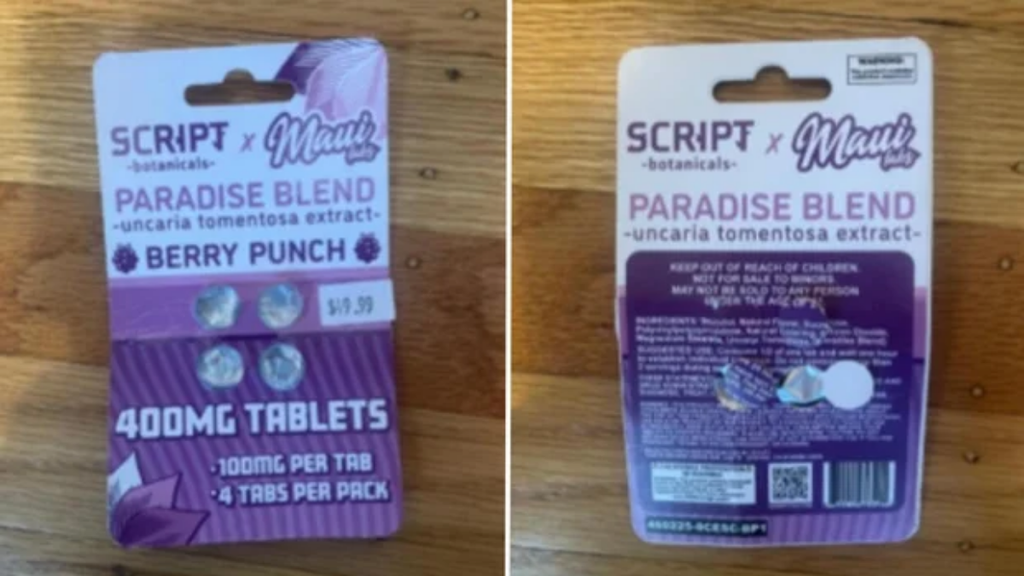
Investigators revealed that the deceased San Francisco resident consumed tablets branded under the name “Script botanicals x Maui labs.” The packaging claimed the product contained “uncaria tomentosa” or “cat’s claw” without listing kratom or 7-hydroxymitragynine as active ingredients. However, tests conducted by the medical examiner’s office confirmed the presence of MGM-15 in both the decedent’s system and the product packaging.
This incident marks the second time this year that the San Francisco Department of Public Health has issued a warning regarding dangerous synthetic opioids circulating through local markets. In April, municipal health officials warned the community about cychlorphine following the fatal overdose of a 16-year-old boy. Cychlorphine is estimated to be roughly 10 times more powerful than fentanyl and is frequently disguised as counterfeit prescription pills like Xanax, Adderall, or Oxycontin.
Given the extreme potency of these unregulated compounds, emergency responders and medical professionals emphasize the necessity of immediate intervention during suspected drug poisonings. Public health agencies advise bystanders to administer naloxone right away to anyone showing signs of an overdose and to contact emergency services immediately by calling 911.
The emergence of MGM-15 in over-the-counter retail environments highlights a growing public health challenge as illicit manufacturers mislabel synthetic opioids to evade law enforcement. Because these deadly products are disguised as legal herbal supplements, unsuspecting consumers face extreme risks of severe illness or fatal overdose. Municipal health departments and federal regulators will likely intensify inspections of smoke shops and gas stations to seize misbranded products and cut off supply chains. Over the coming months, public education campaigns will be vital for informing communities about the dangers of unregulated shop supplements. Strengthening enforcement against deceptive packaging and expanding access to naloxone will remain essential steps in preventing further fatal overdoses across the nation.
Sources / References
- San Francisco Department of Public Health Alert on MGM-15 Fatal Overdose
- US Drug Enforcement Administration (DEA) Schedule 1 Classification Filings for Dihydro-7-hydroxymirtragynine
- San Francisco Medical Examiner’s Office Toxicology Report

Dr. Selim Yusuf, MD, PhD
Founder & Chief Medical Editor, Maintenance Calorie Calculator Expertise: Clinical Nutrition, Metabolic Health, and Exercise Physiology
Experience: 15+ Years of Practical & Clinical Experience
Dr. Selim Yusuf is a licensed physician, clinical research scientist, and dedicated metabolic health expert with over 15 years of practical experience diagnosing, managing, and treating health and nutritional issues. As the founder and chief medical editor of Maintenance Calorie Calculator, Dr. Yusuf combines a rigorous academic background with years of frontline clinical experience to provide evidence-based, highly accessible nutritional tools for the public.
Dr. Yusuf earned his Doctor of Medicine (MD) from the Johns Hopkins University School of Medicine, where he graduated with honors and developed a deep interest in preventive medicine and metabolic health disorders. Following his medical residency, he pursued advanced academic research, earning a PhD in Nutritional Sciences and Metabolism from Harvard University.
His academic and clinical training uniquely bridges the gap between complex biochemical pathways (how the human body extracts energy from food) and practical, everyday clinical care. Over the course of his 15-year career, he has authored multiple peer-reviewed research papers focusing on the management of obesity, metabolic adaptation during prolonged calorie restriction, and macronutrient optimization for lean mass preservation.
Before transitioning his focus to digital health utility platforms, Dr. Yusuf served as an administrative lead and consulting metabolic specialist within top-tier university medical centers. Beyond his institutional roles, he has worked extensively as an elite evidence-based fitness and metabolic coach, guiding hundreds of individuals, ranging from sedentary desk workers battling chronic metabolic slowdowns to competitive athletes looking to optimize body composition.
Throughout his 15 years of practice, Dr. Yusuf noticed a recurring barrier to sustainable patient success: the mathematical confusion surrounding daily nutrition. He observed that most individuals fail to reach their physical goals not from a lack of effort, but because they lack a precise biological baseline.