Home cooking feels healthy, until you try to track calories and realize nothing comes with a nutrition label. A spoon of oil here, a handful of rice there, a sauce poured without measuring, it all adds up faster than most people expect. Learning how to estimate calories in homemade food is one of the most practical skills in nutrition, and it is far simpler than most beginners assume. Living in Seattle, Washington and spending years helping people build sustainable eating habits made one thing clear to me: the biggest gap between people who succeed at managing their weight and those who struggle is not willpower, it is awareness of what they are actually putting in their food. This guide walks through every realistic method for estimating calories in homemade meals, from the precise to the practical.
Why Estimating Calories in Homemade Food Matters
Most people who cook at home underestimate their calorie intake more than people who eat packaged food, not because home cooking is unhealthy, but because ingredients vary and portions are rarely standardized. Learning to estimate calories in homemade food closes the biggest gap in most people’s nutrition awareness.
The Hidden Calories in Home Cooking
Home cooking hides calories in places that do not look like food. These additions are the primary reason home-cooked meals often contain far more calories than people expect:
- Cooking oils and butter: a tablespoon of olive oil is 120 calories; a generous pan drizzle before cooking can easily be 2-3 tablespoons, adding 240-360 invisible calories to a meal that looks simple and healthy. Butter adds 100 calories per tablespoon and is often used in multiples.
- Sauces and marinades: a quarter cup of teriyaki sauce adds 100-150 calories; cream-based pasta sauces add 150-200 per half cup; even a light marinade of olive oil, soy sauce, and honey can add 100-150 calories per serving when the components are tallied individually.
- Portion size differences: home serving sizes are rarely the standardized single-cup or 100-gram portions shown in nutrition databases. A generous home pasta serving might be twice the labeled portion, doubling the estimated calorie total before toppings are added.
Why Restaurant Calories Are Easier to Track
It might seem counterintuitive, restaurant meals are usually more calorie-dense than home cooking, but they are often easier to look up because:
- Standardized recipes: chain restaurants prepare each dish from standardized recipes with consistent ingredient quantities, the Big Mac you order in Seattle is nutritionally identical to the one in Miami
- Nutrition labels and online data: federal law requires chain restaurants with 20 or more locations to post calorie counts; many independent restaurants now post nutritional information online
- Consistent portions: restaurant dishes are typically prepared to a set weight or volume, a six-ounce salmon fillet is a six-ounce salmon fillet across every order
Home cooking has none of these consistencies, which is why learning to estimate calories in homemade food requires a slightly different approach than looking up a restaurant order.
The Real Benefit of Learning Estimation Skills
Precise calorie counting is not the goal of learning to estimate calories in homemade food. The goal is building the underlying awareness that makes nutrition decisions automatic:
- Better portion awareness: once you have weighed a cup of cooked rice a dozen times, you can eyeball a cup of cooked rice accurately for years, you never need to weigh it every time again
- Sustainable diet tracking: estimation is maintainable long-term in a way that obsessive precise measurement is not, it is the difference between a skill you carry with you everywhere and a habit that collapses the moment a scale is not available
- Confidence in everyday cooking: knowing roughly how many calories are in what you cook removes the anxiety around home-cooked meals and makes nutrition planning feel practical rather than overwhelming
The Basic Formula for Estimating Calories in Any Recipe
A simple, four-step method works for virtually any homemade recipe. Learning to estimate calories in homemade food starts with understanding this process, then applying it enough times that it becomes fast and intuitive.
Step 1: Write Down Every Ingredient
The most common estimation error is omitting ingredients that seem too small to matter. They matter:
- Cooking oil: even ‘just a drizzle’ of olive oil before sautéing adds 60-120 calories, write it down
- Sugar and honey in sauces: a tablespoon of honey is 60 calories; a tablespoon of sugar is 45, small by themselves, significant across an entire recipe
- Spices and herbs: individually negligible (under 10 calories per teaspoon for most dried spices); can be omitted from the calculation without meaningful impact
- Finishing additions: the pat of butter added at the end, the parmesan grated over pasta, the drizzle of olive oil over finished vegetables, these finishers are often higher-calorie than they look
Writing every ingredient down before looking up calories forces completeness. Starting the lookup process without a complete list leads to skipping items mid-calculation.
Step 2: Find Calories for Each Ingredient
Three reliable sources for ingredient calorie data:
- Food databases: the USDA FoodData Central database (available free at fdc.nal.usda.gov) is the most comprehensive and scientifically verified source for ingredient calorie data. It includes thousands of ingredients in multiple forms (raw, cooked, dried) with full nutritional profiles.
- Nutrition labels: for packaged ingredients, canned beans, pasta, rice, canned tomatoes, the nutrition label is the most accurate source available. Read the serving size first, then multiply if the recipe uses more than one serving.
- Calorie tracking apps: MyFitnessPal, Cronometer, and Lose It! all include ingredient databases. Scanning a product barcode gives instant calorie data. The recipe calculator feature in these apps allows direct input of ingredients and serving sizes for automatic per-serving calculations.
Step 3: Add All Calories Together
Once every ingredient has a calorie value, sum them to get total recipe calories:
- Add each ingredient’s contribution: (quantity used / standard serving size) × calories per serving = ingredient calorie contribution
- Sum all ingredient contributions: the total is the calorie count for the entire recipe as prepared
- Rounding is acceptable: estimating to the nearest 25 or 50 calories for each ingredient is fine, the goal is a reasonable total, not laboratory precision. A meal estimated at 480 calories versus an actual 510 is a 6% error, meaningless for practical nutrition management.
Step 4: Divide by Servings
Total recipe calories divided by number of servings gives calories per serving. The accuracy of this step depends on how consistently the recipe is divided:
- By weight: weigh the total cooked dish, divide by number of servings, and serve equal-weight portions, the most accurate division method
- By visual equal portions: dividing a casserole into eight equal squares or a pot of soup into consistent ladle servings is reasonably accurate for practical purposes
- By container: portioning into same-size meal prep containers ensures consistent serving sizes across the week
Accuracy improves with practice. The first few times you estimate calories in a homemade recipe, you might be off by 10-15%. After a few months of occasional estimation, most people achieve 85-90% accuracy without needing to be precise.
Kitchen Tools That Make Calorie Estimation Easier
You do not need a professional setup to estimate calories in homemade food accurately. Three basic tools eliminate the majority of estimation error.
Digital Kitchen Scale
A digital food scale is the single most impactful tool for calorie estimation accuracy in home cooking. Weight-based measurement is fundamentally more reliable than volume measurement for most foods:
- Grams do not compress or pack: a cup of oats measured loosely versus packed tightly can differ by 30-40% in weight, and therefore in calories. Weighing in grams eliminates this variable entirely.
- Irregular foods cannot be accurately measured by volume: a chicken breast, a piece of salmon, an avocado, none of these can be measured in cups. Weight is the only accurate option.
- Cooking changes volume but not weight proportionally: a cup of raw spinach wilts to a tablespoon when cooked, but its weight is consistent and its calorie content matches the raw weight
A digital kitchen scale costs $10-$20 and lasts for years. Using it for 2-4 weeks while learning to estimate calories in homemade food builds the visual portion memory that makes scales unnecessary for most common ingredients.
Measuring Cups and Spoons
Measuring cups and spoons are the practical everyday tool for liquids, grains, and small additions that are difficult to weigh:
- Best applications: measuring oil (one tablespoon at 120 calories is a critical measurement), liquid sauces, dried grains before cooking, and condiment additions
- Common measurement mistakes: not leveling dry ingredients (a heaping tablespoon of peanut butter can be 1.5-2 tablespoons of calories), measuring cooked pasta in cups rather than weighing it (compression creates significant variation)
Calorie Tracking Apps
Apps transform ingredient calorie lookup from a multi-step database search into a 10-second barcode scan or a three-word text search:
- MyFitnessPal: the largest food database available in a consumer app, millions of ingredients including branded packaged products; recipe calculator feature allows entering entire recipes for automatic per-serving calorie calculation
- Cronometer: USDA-verified food data with comprehensive micronutrient breakdown alongside calories and macros, more accurate database than apps relying heavily on user-submitted entries
- Lose It!: the fastest and most intuitive interface of the major apps, best for quick daily use
Table 1: Common Kitchen Ingredients and Their Approximate Calories
Experienced dietitians rely on quick mental references for common ingredients. These values appear constantly in home cooking, knowing them by heart makes calorie estimation in homemade food faster and reduces the need to look up every ingredient every time.
| Ingredient | Portion | Approx. Calories |
| Olive oil | 1 tablespoon | ~120 calories |
| Butter | 1 tablespoon | ~100 calories |
| White rice | 1 cup cooked | ~205 calories |
| Chicken breast (skinless) | 100 grams | ~165 calories |
| Egg (whole) | 1 large | ~70 calories |
| Ground beef (85% lean) | 100 grams cooked | ~215 calories |
| Whole milk | 1 cup (240ml) | ~150 calories |
| Pasta (white, cooked) | 1 cup cooked | ~220 calories |
How to Estimate Calories When You Don’t Measure Everything
Real home cooking rarely happens with a scale on the counter for every ingredient. A practical skill set for estimating calories in homemade food includes methods that work without measuring tools.
The Hand Portion Estimation Method
The hand-based portion method uses your own body as the reference, which is convenient because your hand scales approximately with your overall body size. Registered dietitians teach this widely because it works in restaurants, at family dinners, and in any social eating situation:
- Palm of hand = protein portion: approximately 3-4 oz of cooked meat, fish, or poultry, about 150-200 calories depending on protein type
- Cupped hand = carbohydrate portion: approximately half a cup of cooked grains, legumes, or starchy vegetables, about 100-150 calories
- Thumb = fat portion: approximately one tablespoon of oil, nut butter, or butter, about 100-120 calories
- Fist = vegetable portion: approximately one cup of non-starchy vegetables, about 25-60 calories; no restriction needed
Visual Portion Comparisons
Visual reference comparisons are the other widely taught method in nutrition coaching for situations where hand estimation is not convenient:
- Deck of cards = meat or fish serving: approximately 3 oz cooked protein, 150-200 calories depending on type
- Tennis ball = rice, pasta, or fruit serving: approximately half to three-quarter cup cooked grains, or a medium piece of fruit
- Golf ball = nut butter, cheese, or dense fat: approximately two tablespoons of peanut butter (190 calories) or an ounce of cheese (100-120 calories)
- Ping pong ball = salad dressing serving: approximately two tablespoons, the actual labeled serving size that most people exceed significantly
Why Approximation Is Still Useful
A question that comes up frequently: if estimation is imprecise, why bother? The answer is that consistency matters more than precision for long-term nutrition management:
- Consistent approximation produces consistent data: if you always estimate a chicken breast at 200 calories and it is actually 180 or 220, your estimates will have a small systematic bias, but that bias is consistent, and your relative changes in intake will still be accurate
- Long-term tracking still works: people who track food intake imprecisely but consistently lose weight at rates comparable to precise trackers in multiple clinical studies, because the awareness and pattern recognition are the functional mechanisms, not the numbers themselves
- Better than not tracking: even rough estimates, within 20% accuracy, provide far more actionable information than no tracking at all
Estimating Calories in Common Homemade Meals
Certain homemade dishes require specific estimation approaches because of how they are prepared. Here is how to estimate calories in homemade food for the most common dish categories.
Stir-Fries
Stir-fries are one of the trickier dishes to estimate because the oil is not measured and the sauce varies. A systematic approach:
- Oil used in cooking: measure the oil before adding it to the pan, one tablespoon is 120 calories, two tablespoons is 240. Most stir-fries use 1-2 tablespoons if measured, but home cooks free-pouring can easily use 3-4 tablespoons (360-480 calories in oil alone)
- Protein contribution: weigh the raw protein before cooking (a kitchen scale is ideal here), 100 grams of raw chicken breast is approximately 120 calories raw, cooking to approximately 165 calories per 100g of cooked weight
- Vegetables: non-starchy vegetables contribute 25-60 calories per cup regardless of cooking method, estimate a cup per serving as a safe default
- Sauce calories: read the label on bottled sauces and multiply by the fraction of the bottle used; for homemade sauces, add the components (soy sauce ~10 cal/tbsp, oyster sauce ~25/tbsp, honey ~60/tbsp)
Homemade Soups and Stews
Soups and stews are among the easiest homemade dishes to estimate calories for when using the total-pot-divided-by-servings method:
- Calculate total pot calories: add up every ingredient used, all vegetables, protein, grains or legumes, cooking fat, broth or liquid base
- Divide by servings: measure the total finished soup volume, then divide by the number of serving-size portions. A standard soup bowl is approximately 300-350ml; measuring the total volume and dividing gives the number of bowls.
- Broth vs creamy soup differences: a vegetable broth-based soup might total 800-1,200 calories for the whole pot; a cream-based chowder with the same vegetables might total 1,800-2,500 calories for the same volume, the fat content from cream is the primary driver
Rice and Grain Dishes
One of the most important facts for estimating calories in homemade food with grains: raw and cooked calorie values are very different, and apps list both. You must match your measurement to the database entry:
- Raw vs cooked calorie differences: 100 grams of dry white rice is approximately 365 calories; 100 grams of cooked white rice is approximately 130 calories, because the grain has absorbed 2-3x its weight in water. Using the raw-grain calorie value for cooked rice overstates calories by nearly 3x.
- Water absorption effect: always log grains as cooked weight or cooked volume if that is when you are measuring. If measuring raw before cooking, use the raw calorie value.
- Practical rule: weigh or measure after cooking and use cooked values, this is more consistent because the same 100 grams of raw rice absorbs slightly different amounts of water depending on cooking time and rinsing
Table 2: Estimated Calories for Popular Homemade Meals
These calorie ranges reflect typical U.S. home recipes using standard ingredients and portion sizes. Actual values vary based on specific ingredients, cooking methods, and how generously the meal is prepared, these ranges represent the realistic variation in real home cooking.
| Homemade Dish | Typical Serving | Estimated Calories |
| Chicken stir-fry | 1 bowl (~350g) | 350–450 calories |
| Homemade spaghetti with meat sauce | 1 plate (~400g) | 400–600 calories |
| Vegetable soup (homemade) | 1 bowl (~300ml) | 120–250 calories |
| Fried rice | 1 cup (~185g) | 300–450 calories |
| Homemade burger (no bun) | 1 patty (~150g) | 300–380 calories |
| Lentil soup | 1 bowl (~300ml) | 200–300 calories |
Expert Advice From a U.S. Nutrition Specialist
The practical wisdom from experienced nutrition professionals on estimating calories in homemade food consistently points toward awareness and consistency over perfection.
“You don’t need to calculate every single calorie perfectly. Consistent awareness of ingredients and portion sizes matters far more than exact numbers,” says Keri Gans, MS, RDN, registered dietitian nutritionist and author of The Small Change Diet. “Most of my clients see meaningful progress in their eating patterns simply by paying attention to what they are putting in their food, not by achieving precision, but by developing the habit of looking and estimating at all.”
Why Dietitians Recommend Estimation Instead of Perfection
Registered dietitians in clinical practice consistently recommend estimation over precision for long-term calorie tracking because of what obsessive precise tracking produces in many patients:
- Prevents obsession with tracking: research identifies rigid calorie counting as a risk factor for disordered eating in susceptible individuals. Estimation-based tracking provides the awareness benefits while reducing the compulsive quality of precise logging.
- Encourages sustainable habits: a person who estimates calories in homemade food for 90 days develops lasting portion awareness; a person who precisely weighs and logs every gram for 21 days and then burns out has neither the awareness nor the habit
- Reduces food anxiety: anxiety about food, specifically about whether a meal was logged precisely enough, is one of the most common reasons people abandon tracking entirely. Estimation removes this anxiety by removing the expectation of precision
The 80/20 Rule for Calorie Tracking
Many nutrition coaches and dietitians teach an 80/20 approach to calorie tracking that aligns well with learning to estimate calories in homemade food:
- 80% reasonably accurate tracking: most meals are logged with genuine effort and reasonable accuracy, weighing ingredients when practical, using visual estimation when not, and using the four-step recipe method for complex dishes
- 20% flexible eating: approximately one in five eating occasions is treated as social, celebratory, or simply unknown, estimated at a reasonable ballpark and moved past without obsession
This ratio produces enough data to identify patterns and make adjustments while maintaining a sustainable relationship with food and tracking. Trying to push above 80% accuracy typically produces diminishing returns in actual outcome improvement alongside significant increases in tracking-related stress.
Real-Life Example: Estimating Calories in a Homemade Dinner
Rain tapping on the kitchen window on a Tuesday evening in Portland, Oregon. Garlic hitting olive oil in the pan, that unmistakable sound and smell of dinner actually starting. Tonight’s meal: pan-seared chicken breast, roasted potatoes, and steamed broccoli. Simple ingredients. But how many calories, exactly?
Here is the estimation walkthrough:
- Chicken breast (150g raw, seared in olive oil): raw 150g chicken breast is approximately 165 calories; the oil absorbed during searing (estimated half tablespoon of the one tablespoon used) adds approximately 60 calories. Chicken contribution: ~225 calories.
- Olive oil (1 tablespoon, split between chicken and potatoes): total oil 120 calories, approximately half going into the chicken estimation above, half into potato roasting. Remaining oil contribution to potatoes: ~60 calories.
- Potatoes (200g roasted): 200g of potato is approximately 154 calories before oil; adding the 60 calories of oil absorbed during roasting brings the potato contribution to approximately 214 calories.
- Broccoli (1 cup steamed, ~91g): approximately 31 calories, steaming adds no calories.
Total estimated meal calories: 225 + 60 (oil in potatoes) + 154 + 31 = approximately 470-500 calories. This is a reasonably accurate estimate for a straightforward home-cooked dinner, and it took less than three minutes to calculate using basic ingredient knowledge.
Common Mistakes When Estimating Homemade Food Calories
Even experienced nutrition trackers make these errors when estimating calories in homemade food. Knowing them in advance makes them easy to avoid.
Forgetting Cooking Oils
Cooking oil is consistently the most frequently forgotten and most significantly underestimated ingredient in home meal calorie estimation. The reasons:
- It does not look like food during cooking, it is a preparation medium, so it mentally does not register as an ingredient being consumed
- Home cooks pour oil freely, most home cooks who use oil do not measure it. A generous pour for a large skillet can easily be 3-4 tablespoons (360-480 calories) when the cook imagines they used ‘a little bit’
- Not all oil stays in the pan, some oil is absorbed by the food, some remains; the fraction absorbed varies by food type and cooking time, making precise calculation difficult. A practical default: assume approximately 50-75% of cooking oil is absorbed by the food.
Ignoring Sauces and Condiments
Sauces and condiments are the second most consistently underestimated calorie source in homemade meals:
- Mayonnaise: 90 calories per tablespoon, a generous spread on a sandwich can be 2-3 tablespoons (180-270 calories)
- Salad dressing: the labeled serving is typically two tablespoons at 120-180 calories; home servings are often 4-6 tablespoons (240-540 calories) for a large dinner salad
- Cream-based sauces: a quarter cup of alfredo or cream sauce adds 150-200 calories; a generous pasta serving might use half a cup to three-quarter cup of sauce (300-400 calories from sauce alone)
Misjudging Portion Sizes
Restaurant dining has permanently distorted most Americans’ sense of what a normal portion looks like. Moreover, Restaurant pasta portions are typically three to four cups; a standard nutritional serving is one cup cooked. Restaurant steak entrees are often 10-16 ounces; a standard serving is 4-6 ounces.
After years of restaurant eating, home servings that feel modest are frequently 1.5-2x standard nutritional portions. Using a kitchen scale for two to four weeks recalibrates this perception, and that recalibration tends to persist for years afterward.
How to Improve Your Estimation Skills Over Time
Estimating calories in homemade food is a genuine skill, one that improves with deliberate practice over weeks and months.
Weigh Foods for a Few Weeks
Using a kitchen scale consistently for two to four weeks, not permanently, just as a training period, builds visual portion memory that persists long after the scale is put away:
- Weigh a cup of cooked rice every day for a week: after seven repetitions, you can eyeball a cup of cooked rice accurately without measuring. This visual calibration persists reliably.
- Weigh a tablespoon of peanut butter: most people pour 2-3 times a tablespoon, seeing the actual one-tablespoon quantity recalibrates the pour for months
- Weigh a standard protein serving (4 oz / ~113g): seeing what a 4-oz chicken breast actually looks like on a plate recalibrates portion expectations across multiple protein sources
Learn Calorie Anchors
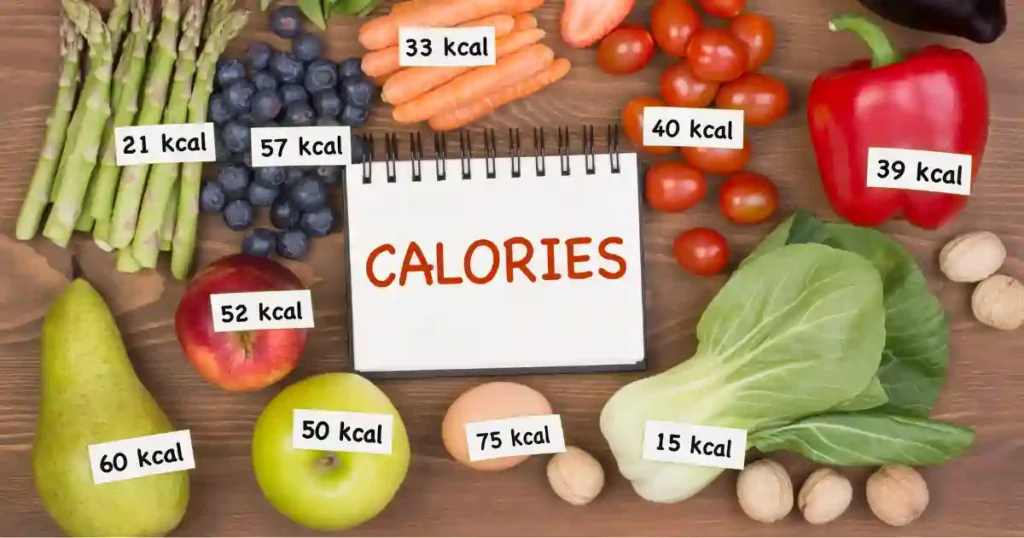
Memorizing calories for a small set of frequently-used staple ingredients is one of the highest-leverage investments in calorie estimation skill. These anchor foods appear in dozens of different recipes, knowing their values precisely allows rapid estimation of any dish containing them:
- Eggs: ~70 calories each, appears in breakfasts, baking, and protein additions
- Chicken breast: ~165 calories per 100g cooked, the most common protein in American home cooking
- Rice: ~200-210 calories per cup cooked, the most common grain in American and Asian home cooking
- Olive oil: ~120 calories per tablespoon, appears in virtually every savory cooking context
- Apple or banana: ~95-105 calories, the most common snack fruit reference
Keep a Simple Food Journal
A simple food journal, logging meals in a notebook or app without necessarily calculating precise calorie totals, accelerates the development of estimation skill by forcing active attention to what you ate:
- Write what you ate and roughly how much: ‘chicken stir-fry, about one bowl, generous oil’ creates the habit of noticing
- Review weekly for patterns: which meals are consistently higher-calorie than expected? Which preparation methods add the most unexpected calories?
- Refine estimates over time: comparing estimated calories against scale-measured actuals for the same dish three or four times builds accuracy that never fully degrades
Table 3: Calorie Anchor Foods Worth Memorizing
Experienced dietitians memorize a small set of high-frequency staple foods. These six anchor values can be used to estimate calories in homemade food for dozens of common recipes, no lookup required.
| Food | Portion | Calories to Memorize |
| Egg (whole) | 1 large | ~70 calories |
| Chicken breast (skinless) | 100 grams cooked | ~165 calories |
| White or brown rice | 1 cup cooked | ~200–210 calories |
| Olive oil | 1 tablespoon | ~120 calories |
| Apple (medium) | 1 medium (~182g) | ~95 calories |
| Banana (medium) | 1 medium (~118g) | ~105 calories |
Technology That Makes Estimating Calories Easier
Technology has dramatically reduced the effort required to estimate calories in homemade food. Three categories of tools have transformed what was once a manual calculation into a fast, accessible habit.
Barcode Scanning for Ingredients
Every major tracking app includes a barcode scanner that pulls complete nutritional data from a product’s UPC code in under five seconds. This completely eliminates the need to manually look up packaged ingredients, canned beans, pasta, jarred sauces, dairy products. Point the phone camera at the barcode, confirm the serving size matches what was used, and the ingredient is logged. For home cooks using any packaged ingredients, this feature alone removes 60-70% of the manual effort from recipe calorie estimation.
Recipe Calorie Calculators
Recipe calorie calculator features, available in MyFitnessPal, Cronometer, and several standalone recipe tools, allow users to:
- Enter every ingredient in a recipe with its quantity used
- Specify the number of servings the recipe produces
- Receive an automatic per-serving calorie and macro breakdown
Entering a recipe once creates a saved entry that can be logged instantly for every future preparation of that dish. For families with a rotating set of 10-15 regular home recipes, entering each recipe once creates a permanent shortcut that makes subsequent logging nearly instantaneous.
AI Food Recognition Apps
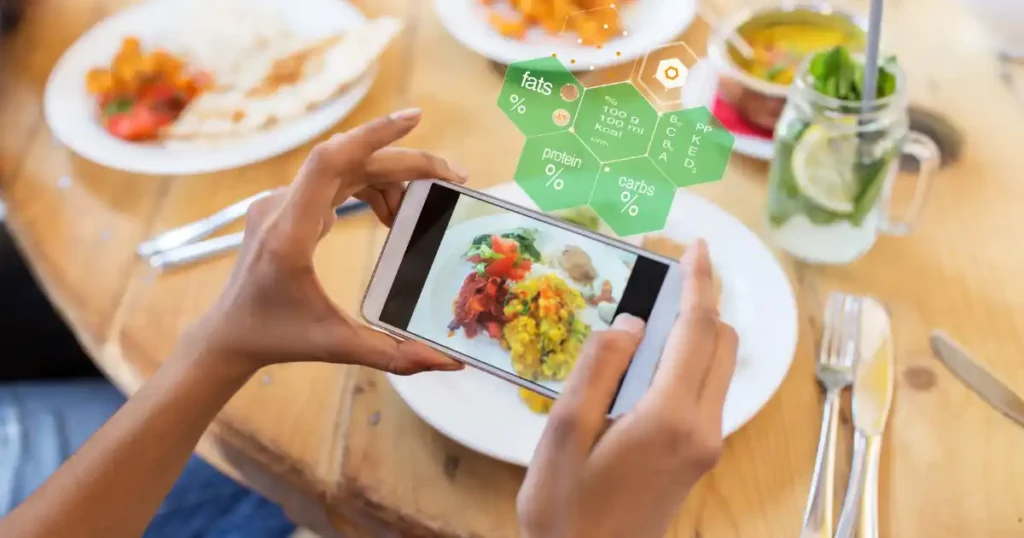
A newer category of apps, including Lose It!’s Snap It feature and several standalone applications, uses artificial intelligence to estimate calories from a photograph of a meal. The technology analyzes the visual composition of the food and produces a calorie estimate without manual ingredient entry.
Current accuracy: AI food recognition apps are reasonably accurate for simple, recognizable dishes and less accurate for complex mixed dishes, unusual presentations, or meals where key calorie contributors (oils, sauces) are not visually apparent. They are useful as a fast rough estimate for meals that cannot be measured conventionally, not as a replacement for ingredient-based calculation when accuracy matters.
Who Should Track Calories in Homemade Food
Calorie estimation in home cooking is not necessary for everyone. But it provides specific, practical value in certain situations.
People Trying to Lose Weight
For anyone pursuing fat loss, learning to estimate calories in homemade food is one of the most important skills available. The majority of calorie surplus that drives unintended weight gain is found in home cooking, in the oil used casually, the sauce poured generously, the serving scooped without measuring. Developing estimation skill closes the gap between what people think they are eating and what they are actually eating.
Athletes Managing Nutrition
Competitive athletes, particularly those in weight-class sports, endurance events, or body composition-focused training, need precise nutrition management that extends beyond restaurant and packaged foods into their home kitchen. Estimating calories in homemade food accurately is a core skill for anyone whose performance depends on matching calorie and macro intake to training demands.
Individuals Tracking Medical Diets
People managing diabetes, chronic kidney disease, cardiovascular conditions, or other medical conditions that require dietary tracking need to estimate calories in homemade food as part of medical nutrition therapy. A registered dietitian can provide specific guidance for medical-condition-related tracking that goes beyond general estimation methods.
Final Thoughts on Estimating Homemade Food Calories
Tracking calories in homemade food might feel daunting the first time, but the skill simplifies quickly with practice. Once the four-step recipe method is familiar, once a handful of anchor food calorie values are memorized, and once visual portion cues are calibrated through a few weeks of scale use, estimating calories in homemade food becomes a fast, natural part of cooking.
Perfection is not the goal. Awareness and consistency are the goal. A person who estimates calories in homemade food at 85% accuracy for 90 days has meaningfully better nutrition awareness than someone who tracked precisely for two weeks and gave up.
The kitchen is already your most powerful nutrition tool. Learning to estimate what comes out of it just makes you better at using it.
Final Recommendation
After years of helping people develop calorie estimation skills in home cooking, here is the concise, practical guidance for getting started:
Buy a digital kitchen scale and use it for three weeks. Weigh your most common foods, rice, chicken, peanut butter, cooking oil, every time you use them for three weeks. Do not aim to do this permanently. The goal is to build visual memory that lasts for years. This three-week investment is the single highest-leverage action for learning to estimate calories in homemade food.
Memorize five calorie anchor values: egg (~70), chicken breast per 100g (~165), cooked rice per cup (~205), olive oil per tablespoon (~120), medium apple (~95). These five numbers cover the foundation of dozens of common home recipes. Knowing them removes the need to look up the most frequently occurring ingredients.
Use the four-step method for new recipes: write every ingredient, look up calories, sum the total, divide by servings. Do this for any new dish you cook. After entering a recipe once into a tracking app, it is saved permanently, you only do the calculation once.
Apply the 80/20 rule. Aim for reasonable accuracy 80% of the time. The other 20%, restaurant meals, social occasions, days when tracking is not practical, estimate a reasonable number, log it, and move on. The overall pattern over weeks matters far more than any single precise day.
Start with one week of consistent estimation. Track every home-cooked meal for seven days using whatever combination of these methods is practical. One honest week of attention to what you put in your food will reveal more about your actual eating habits than months of approximate guessing.
Cook with Confidence: How to Estimate Calories in Homemade Food
Cooking at home is a great way to stay healthy. Here is how to estimate calories in homemade food so you can track your progress with ease.
List every item you put in the pot. Find the energy for each part using a food app. Add these numbers up to get the total for the whole meal.
It is best to weigh food while it is raw. Cooking can change the weight due to water loss. This is the most precise way to find the true fuel count.
Divide the total meal count by the number of portions you made. This tells you exactly what is in your bowl. It makes your daily tracking very simple.
Most spices have very little energy and do not need a count. Focus on oils, meats, and grains first. These are the parts that change your total the most.
Yes, a scale is a top tool for home cooks. It takes the guesswork out of your portions. This helps you reach your goals faster and with less stress.

Dr. Selim Yusuf is a professional physician and metabolic health expert dedicated to helping individuals achieve long-term weight stability. With years of clinical experience, Dr. Yusuf specializes in the science of caloric maintenance, the critical “missing link” between short-term dieting and lifelong health.
While many health platforms focus solely on weight loss, Dr. Yusuf recognizes that the greatest challenge lies in maintaining results. His medical approach moves beyond simple math, accounting for hormonal balance, metabolic adaptation, and lifestyle factors. Through Maintenancecaloriecalculator.us, he provides a precision-engineered tool designed to help users find their “metabolic zero”, the exact caloric intake needed to fuel the body without unwanted weight fluctuations.