Most diet advice sounds like a version of the same instruction: eat less. But that advice alone does not solve the real problem, hunger. Hunger is what derails most fat loss efforts, not a lack of motivation. Discovering high volume low calorie foods for smart weight loss changed how I approach nutrition coaching entirely, because these foods solve the hunger problem directly. They fill a plate, fill a stomach, and satisfy the psychological expectation of eating a real meal, all while keeping calorie totals well within a deficit. Coaching clients in Phoenix, Arizona through different eating approaches taught me that the people who succeed long-term are almost never the ones eating tiny portions. They are the ones who learned to eat more of the right things. This guide covers exactly what those foods are, why they work biologically, and how to build real meals around them.
What Are High Volume Low Calorie Foods?
High volume low calorie foods provide a large physical portion, significant weight and stomach-filling volume, while delivering relatively few calories. The concept is built on a fundamental principle of satiety physiology: the stomach responds to physical volume and weight, not just calories.
The Science of Food Volume and Satiety
Feeling full is not primarily a calorie signal, it is a physical signal. The stomach contains stretch receptors that detect expansion and send fullness signals to the brain through the vagus nerve. When the stomach is physically full of food volume, those stretch receptors fire regardless of whether the food was calorie-dense or calorie-sparse.
This is the biological mechanism behind high volume low calorie foods for smart weight loss:
- Energy density explained: energy density is calories per gram of food. Water has zero energy density. Fat has 9 calories per gram. Foods with high water and fiber content are physically heavy and voluminous while contributing relatively few calories per gram, they trigger stomach stretch receptors without loading the calorie budget.
- Water content in foods: most non-starchy vegetables are 85-95% water by weight. A cup of cucumber (119 grams) is approximately 96% water, it weighs over four ounces and contributes only 16 calories. Its physical presence in the stomach is real and meaningful for satiety, even though its calorie contribution is negligible.
- Fiber and mechanical fullness: dietary fiber adds physical bulk and slows gastric emptying, meaning food stays in the stomach longer, extending the period during which stretch receptors are activated and fullness is maintained
Why These Foods Help With Weight Loss
High volume low calorie foods produce weight loss through a straightforward mechanism: they allow a significant calorie reduction without producing the hunger that typically causes diet failure:
- Lower calorie density allows eating more food by weight: replacing 200 calories of chips (approximately 28 grams, a small handful) with 200 calories of broccoli and chicken gives you a full dinner plate. The stomach does not know about the calorie count, it responds to the volume.
- Improved appetite control: foods high in water and fiber consistently score higher on satiety indexes than calorie-dense alternatives. Research published in the European Journal of Clinical Nutrition using the Satiety Index found vegetables, legumes, and whole grains consistently outperformed calorie-dense snack foods at equivalent calorie levels.
- Reduced unintentional overeating: calorie-dense, low-volume foods, chips, crackers, nuts, processed snacks, are easy to consume in large quantities before fullness signals register. High volume foods slow the eating process and trigger fullness before overconsumption occurs.
The Concept of Energy Density in Nutrition
Energy density is the framework that explains why high volume low calorie foods for smart weight loss work so reliably. The concept was developed and popularized by Dr. Barbara Rolls, Professor of Nutrition at Penn State University and creator of the Volumetrics Diet, one of the most research-supported dietary frameworks for weight management.
“People tend to eat a consistent weight of food daily. By lowering energy density, you can eat satisfying portions while reducing calorie intake,” explains Dr. Rolls, whose research on food volume and satiety spans more than two decades of clinical investigation. Her work consistently demonstrates that people maintain similar food intake by weight across different diets, meaning that replacing high-energy-density foods with low-energy-density alternatives reduces calorie intake without producing proportional increases in hunger.
Practical energy density reference ranges: foods below 0.6 calories per gram are extremely low energy density (most non-starchy vegetables, clear broths, most fruits); foods between 0.6-1.5 are low energy density (starchy vegetables, legumes, whole grains, low-fat dairy); foods above 4.0 are high energy density (nuts, oils, processed snacks, most fast food). Shifting the diet toward the low end of this scale is the core mechanism of volume eating for weight loss.
How High Volume Foods Support Sustainable Weight Loss
The goal of smart weight loss is not just eating less, it is eating in a way that maintains a calorie deficit without triggering the hunger responses that cause diet abandonment. High volume low calorie foods for smart weight loss address this challenge directly.
The Role of Water Content in Foods
Water is the most calorie-efficient volume contributor available in food. It weighs exactly one gram per milliliter and contributes zero calories, meaning foods with high water content deliver maximum stomach-filling weight at minimum calorie cost:
- Fruits and vegetables contain 80-95% water by weight: a pound of raw spinach is about 92% water, it weighs 454 grams and contains approximately 100 calories. A pound of almonds is about 5% water, it weighs 454 grams and contains approximately 2,600 calories. The weight is the same; the calorie difference is 26-fold.
- Water adds volume without calories: soups, stews, and water-rich vegetables physically expand in the stomach in the same way that dry, dense foods do, triggering the same stretch receptor signals, while contributing a fraction of the calories
- Hydration and appetite: mild dehydration is frequently misinterpreted as hunger. Eating water-rich foods supports hydration alongside satiety, potentially reducing hunger driven by dehydration rather than genuine caloric need
Fiber’s Effect on Fullness
Dietary fiber supports satiety through multiple distinct mechanisms that extend well beyond simple stomach filling:
- Slows digestion and gastric emptying: soluble fiber forms a gel in the digestive tract that slows the passage of food from the stomach into the small intestine, extending the physical presence of food in the stomach and prolonging the fullness period after eating
- Stabilizes blood sugar: high-fiber foods slow glucose absorption, preventing the rapid blood sugar spike and subsequent crash that drives hunger within 1-2 hours of low-fiber meals. Stable blood sugar means consistent energy and fewer hunger-driven eating urges between meals.
- Supports gut health and satiety hormones: gut bacteria ferment soluble fiber into short-chain fatty acids (SCFAs) like butyrate and propionate, compounds that directly signal the brain about fullness and energy availability, independent of the stomach stretch mechanism
Protein and Satiety
Protein is the most satiating macronutrient, and combining protein with high volume low calorie vegetables creates meals that produce exceptional fullness per calorie:
- Protein triggers fullness hormones: protein intake stimulates the release of PYY (peptide YY) and GLP-1, two of the primary post-meal satiety signals, more strongly than equivalent calories from carbohydrates or fat. Ghrelin (the hunger hormone) is also more effectively suppressed by protein than by other macronutrients.
- Helps preserve muscle during weight loss: adequate protein intake during a calorie deficit preserves lean muscle mass, which maintains BMR and prevents the metabolic slowdown that accompanies lean mass loss
Top High Volume Low Calorie Vegetables
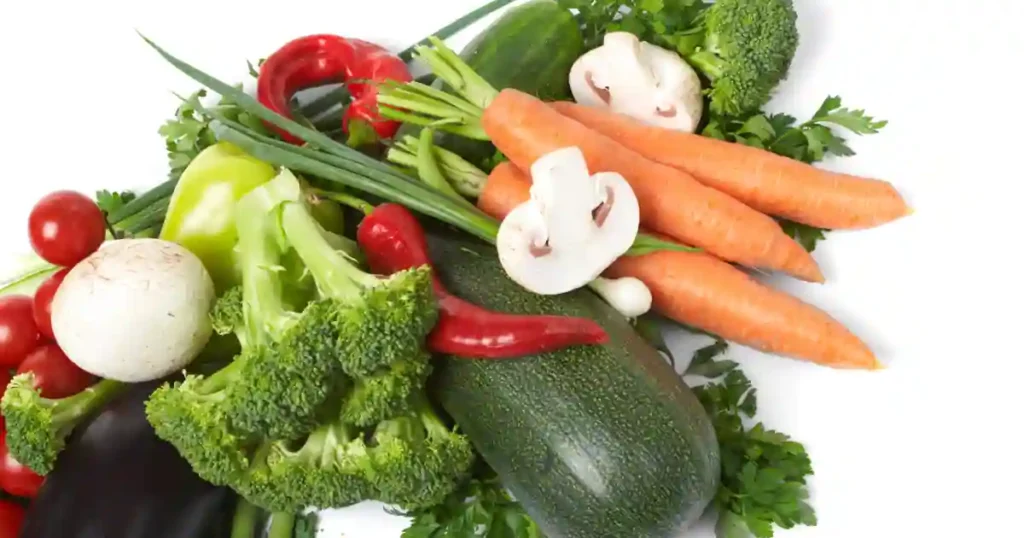
Vegetables are the foundation of any high volume low calorie foods for smart weight loss approach. They deliver the most physical volume per calorie of any food category.
Leafy Greens
Leafy greens are the most extreme example of low energy density foods available. A large salad bowl filled with leafy greens may weigh 150-200 grams and contribute 15-25 calories, essentially free volume:
- Spinach: 7 calories per cup raw; exceptional micronutrient profile including iron, magnesium, and vitamins A, C, and K; mild flavor integrates into any dish
- Romaine lettuce: 8 calories per cup; strong physical crunch creates eating satisfaction beyond just volume; high water content (95%)
- Kale: 33 calories per cup raw, higher than other leafy greens but still extremely low energy density; highest antioxidant content of any common vegetable alongside significant calcium and vitamin K
Cruciferous Vegetables
Cruciferous vegetables provide more physical bulk per serving than leafy greens, they are denser, while still delivering exceptional low calorie volume:
- Broccoli: 31 calories per cup; high in fiber, vitamin C, and sulforaphane (a compound with documented anti-inflammatory and anti-cancer properties in research literature); the fiber-to-calorie ratio is among the best of any vegetable
- Cauliflower: 25 calories per cup; functions as a low-calorie substitute for rice (riced cauliflower), mashed potato (cauliflower mash), and pizza crust, allowing familiar meal formats with dramatically lower calorie density
- Brussels sprouts: 38 calories per cup; among the highest protein content of any vegetable; high fiber and glucosinolates (compounds associated with reduced cancer risk in epidemiological research)
Hydrating Vegetables
Hydrating vegetables have some of the highest water content of any food, making them exceptionally efficient at adding physical volume and weight to meals with minimal calorie contribution:
- Cucumbers: 16 calories per cup; 96% water by weight; refreshing raw crunch in salads and snack plates
- Zucchini: 20 calories per cup; absorbs flavors well when cooked; can be spiralized into ‘zoodles’ as a lower-calorie pasta substitute (20 calories per cup versus 220 calories per cup of cooked pasta)
- Celery: 16 calories per cup; the classic negative-calorie myth food, while not actually negative calorie, celery is so low in energy density that it is essentially free from a calorie management perspective; the fibrous texture requires substantial chewing, slowing eating pace
Table 1: High Volume Vegetables and Their Calorie Density
Nutrition professionals start meal planning with these vegetables because they deliver the largest portions at the fewest calories. A combined bowl of these vegetables could weigh 400-500 grams and contribute fewer than 100 calories total, the definition of high volume low calorie foods for smart weight loss.
| Vegetable | Serving Size | Calories |
| Spinach (raw) | 1 cup (~30g) | 7 calories |
| Cucumber (sliced) | 1 cup (~119g) | 16 calories |
| Zucchini (sliced) | 1 cup (~124g) | 20 calories |
| Cauliflower (florets) | 1 cup (~107g) | 25 calories |
| Broccoli (florets) | 1 cup (~91g) | 31 calories |
| Celery (chopped) | 1 cup (~101g) | 16 calories |
| Romaine lettuce | 1 cup (~47g) | 8 calories |
Best High Volume Low Calorie Fruits
Fruits contain natural sugars but remain relatively low in calorie density because their sugar is packaged with significant water and fiber that reduces effective energy density and slows absorption.
Berries
Berries have the most favorable calorie-to-volume ratio of any fruit category, and some of the highest antioxidant content of any food:
- Strawberries: 49 calories per cup whole; 91% water; high vitamin C content (more per gram than oranges); naturally sweet enough to satisfy dessert cravings at very low calorie cost
- Blueberries: 84 calories per cup; highest antioxidant content of commonly available berries; anthocyanins associated with improved insulin sensitivity and cardiovascular health in clinical research
- Raspberries: 64 calories per cup; highest fiber content of any common berry (8 grams per cup, one-third of daily recommended intake from a single serving); the combination of low calorie density and high fiber makes raspberries exceptionally satiating
High-Water Fruits
High-water fruits provide significant eating volume and natural sweetness at low calorie cost:
- Watermelon: 46 calories per cup cubed; 92% water by weight; among the lowest calorie density of any fruit; naturally portable and requires no preparation
- Oranges: 62 calories per medium orange; 87% water; the physical act of peeling and sectioning slows eating pace; high vitamin C and flavonoid content
- Grapefruit: 52 calories per half; research has associated grapefruit consumption with improved insulin sensitivity; the slightly bitter flavor naturally limits overconsumption for most people
Fiber-Rich Fruits
Apples and pears deserve special mention for their combination of high water content, high fiber, and the mechanical chewing required to eat them, which extends meal duration and slows calorie consumption:
- Apples: 95 calories per medium apple; high pectin content (soluble fiber that forms a gel in the gut and slows digestion); the chewing required to eat an apple extends the eating window significantly compared to calorie-equivalent processed snacks
- Pears: 101 calories per medium pear; the highest fiber content of any common fruit by weight; rich in sorbitol and fructose at a ratio that tends to produce gentle, sustained energy rather than a sharp glucose spike
Protein Sources That Are Filling but Lower in Calories
Protein-rich foods are essential partners to vegetables in high volume low calorie meals. Without adequate protein, even large-volume meals leave hunger returning within 1-2 hours. The best choices are proteins with high satiety-per-calorie ratios.
Lean Animal Proteins
Lean animal proteins deliver complete amino acid profiles and strong satiety signals at moderate calorie cost:
- Chicken breast (skinless): 165 calories per 100g cooked; the benchmark lean protein, high protein density, neutral flavor, extremely versatile in cooking
- Turkey breast: similar to chicken at 150-165 calories per 100g cooked; slightly higher in tryptophan which supports serotonin production, relevant for mood and appetite regulation
- White fish (tilapia, cod, halibut): 90-110 calories per 100g cooked; the lowest calorie complete proteins available from animal sources; high water content keeps portions visually substantial
Low-Fat Dairy
Low-fat dairy options combine protein and satiety at low calorie levels:
- Greek yogurt (plain, non-fat): approximately 100 calories per cup with 17-20 grams of protein; the whey and casein protein combination produces both immediate and sustained satiety signals; the thick texture satisfies physically alongside nutritionally
- Cottage cheese (low-fat): approximately 90 calories per half cup with 12-14 grams of protein; high casein protein content produces very slow digestion and extended satiety; mild flavor pairs with both savory and sweet additions
Plant-Based Protein Options
Plant-based protein sources add both protein and fiber, a combination that produces dual satiety mechanisms from a single ingredient:
- Lentils: 230 calories per cup cooked with 18 grams of protein and 16 grams of fiber, one of the best calorie-to-satiety ratios of any food. The combination of protein and fiber triggers multiple independent fullness signals simultaneously.
- Tofu (firm): 76 calories per 100g with 8 grams of protein; extremely neutral flavor absorbs marinades and seasonings; high water content contributes to volume without added calories
- Edamame: 189 calories per cup shelled with 17 grams of protein and 8 grams of fiber; the only widely available plant food that is a complete protein (containing all nine essential amino acids)
Table 2: Filling Protein Foods With Moderate Calories
Protein foods contain more calories than vegetables but produce proportionally stronger satiety responses. Combined with high volume vegetables, these proteins create meals that are both physically substantial and nutritionally complete.
| Protein Food | Serving | Calories |
| Chicken breast (cooked, skinless) | 100g | 165 calories |
| Greek yogurt (plain, non-fat) | 1 cup (~245g) | ~100 calories |
| Cottage cheese (low-fat) | 1/2 cup (~113g) | ~90 calories |
| Lentils (cooked) | 1 cup (~198g) | ~230 calories |
| White fish (tilapia, cod) | 100g cooked | ~90-100 calories |
| Tofu (firm) | 100g | ~76 calories |
High Volume Low Calorie Snacks That Actually Satisfy
Snacks are where many fat loss efforts quietly collapse, not from large meal failures, but from constant small additions that eliminate the calorie deficit. High volume low calorie snacks address this by providing real eating satisfaction at minimal calorie cost.
Air-Popped Popcorn
Air-popped popcorn is one of the most effective high volume snacks available, a textbook example of high volume low calorie foods for smart weight loss:
- 3 cups of air-popped popcorn: approximately 90 calories, a large bowl that takes 15-20 minutes to work through and delivers significant physical satiety
- High volume per calorie: popcorn is approximately 96% air by volume, each cup weighs about 8 grams and contributes only 30 calories, producing maximum volume per calorie of any grain-based food
- Fiber and chewing time: popcorn provides 3-4 grams of fiber per 3-cup serving and requires substantial chewing, extending the eating experience and triggering satiety signals that fast-eating dense snacks do not
Vegetable-Based Snacks
Raw vegetables as snacks deliver maximum volume at minimum calorie cost:
- Carrot sticks: 52 calories per cup chopped; natural sweetness satisfies mild sugar cravings; dense crunch requires sustained chewing that extends snack duration
- Cherry tomatoes: 27 calories per cup; high water content; convenient finger food format, no preparation required
- Bell pepper slices: 30-40 calories per cup depending on color; sweet flavor without sugar; high vitamin C content
These vegetables pair naturally with small amounts of protein-based dips, two tablespoons of hummus (70 calories) or plain Greek yogurt dip, adding protein and healthy fat without dramatically increasing calorie cost.
Broth-Based Soups
Broth-based soups are perhaps the most underutilized high volume low calorie food in the context of weight loss. Research from Penn State University (including Dr. Rolls’s own lab) found that eating soup before a meal reduced total meal calorie intake by approximately 20% compared to eating a solid calorie-equivalent appetizer:
- Extremely low calorie density: a simple vegetable broth soup with non-starchy vegetables might contain 80-120 calories per large bowl, enough to meaningfully reduce appetite for the subsequent meal
- High satiety through volume and heat: the combination of high water volume and warm temperature appears to trigger fullness signals more effectively than cold water-rich foods at the same volume; hot food naturally slows eating pace
- Pre-meal soup strategy: starting dinner with a bowl of broth-based vegetable soup before the main course consistently reduces total dinner calories consumed, a practical application of volume eating principles
Real-Life Example: A High Volume Day of Eating
Cold morning in Denver, Colorado. Snow on the ground outside, coffee brewing in the kitchen, and a plate of food that looks far too large to possibly fit within a weight loss calorie budget.
Breakfast: a cup of plain Greek yogurt layered with a full cup of sliced strawberries and a handful of blueberries, with a sprinkle of chia seeds. The bowl looks full. It feels like a real breakfast. Total calories: approximately 200-250. The protein from the yogurt and the fiber from the fruit will keep hunger quiet for three to four hours.
Lunch: a dinner-plate-sized salad, three large handfuls of spinach and romaine, a full cup of sliced cucumber, half a cup of cherry tomatoes, a handful of shredded carrots, topped with 150 grams of grilled chicken breast and one tablespoon of olive oil vinaigrette. The plate is enormous. Total calories: approximately 380-420. Two large glasses of water alongside.
Afternoon snack: a medium apple and three cups of air-popped popcorn lightly seasoned with nutritional yeast and black pepper. Eating takes about 20 minutes. Total calories: approximately 190.
Dinner: a large stir-fry, two cups of broccoli, a cup of mushrooms, a cup of bok choy, 150 grams of firm tofu, all in one tablespoon of sesame oil and soy sauce over half a cup of brown rice. The bowl is heaped and deeply satisfying. Total calories: approximately 450-500.
Daily total: approximately 1,220-1,360 calories. A significant deficit for most adults. And the plate at every meal looked enormous, not like dieting at all.
Expert Advice From a U.S. Registered Dietitian
The professional consensus on high volume low calorie foods for smart weight loss is consistent: filling the plate with volume before adding calorie-dense components is the most reliable strategy for managing intake without hunger.
“One of the easiest ways to reduce calories without feeling deprived is to fill half your plate with vegetables,” says Keri Gans, MS, RDN, registered dietitian nutritionist and author of The Small Change Diet. “Most people dramatically underestimate how full vegetables can make you, they associate eating less with being hungry. Volume eating flips that expectation. You can eat more food, feel more satisfied, and consume fewer calories simultaneously. That combination is why these strategies actually stick.”
Why Experts Recommend Volume Eating
From working with registered dietitians and reviewing clinical nutrition literature, the consistent reasons experts favor volume eating strategies for weight management:
- Reduces hunger signals effectively: the physical fullness from high volume meals directly suppresses ghrelin (the hunger hormone) and activates stretch-receptor satiety signaling, producing real, physiological fullness rather than relying on willpower
- Encourages nutrient-dense foods naturally: high volume low calorie foods are almost entirely whole, minimally processed foods, vegetables, fruits, lean proteins, legumes. Choosing high volume foods automatically shifts the diet toward better nutritional quality.
- Makes deficits more sustainable: research on long-term dietary adherence consistently shows that approaches that allow larger food volume produce better adherence than equivalent-calorie approaches requiring small portion sizes, because the experience of eating feels more normal and satisfying
Why Extreme Restriction Often Fails
The evidence for why aggressive calorie restriction produces poor long-term outcomes is robust:
- Hunger hormones increase disproportionately: severe restriction (below 1,200-1,400 calories for most adults) triggers a significant rise in ghrelin that persists over time, making hunger progressively harder to resist the longer the restriction continues
- Binge eating risk rises: the psychological and physiological pressure of severe restriction makes compensatory overeating statistically likely, research shows that periods of extreme restriction are frequently followed by overconsumption that eliminates the deficit benefit
How to Build High Volume Meals at Home
Building meals around high volume low calorie foods does not require complicated recipes. It requires a systematic approach to plate construction and a few practical cooking habits.
The Half-Plate Vegetable Strategy
The most practical framework for building high volume low calorie meals:
- Half the plate: non-starchy vegetables, whatever combination appeals: salad greens, roasted broccoli, steamed zucchini, raw cucumber. This half costs 50-100 calories and provides the majority of the meal’s physical volume.
- One quarter of the plate: lean protein, chicken, fish, eggs, tofu, legumes, providing satiety, muscle maintenance, and metabolic support
- One quarter of the plate: complex carbohydrates, brown rice, quinoa, sweet potato, whole grain bread, providing sustained energy without excess calorie density
This plate structure naturally produces meals in the 400-600 calorie range that fill the stomach, provide complete nutrition, and maintain a calorie deficit for most adults, without any tracking required.
Cooking Methods That Preserve Low Calories
Cooking method is the primary variable that converts naturally low-calorie vegetables into high-calorie dishes:
- Steaming: adds zero calories; preserves water-soluble vitamins better than boiling; maintains texture without fat addition
- Grilling: allows fat to drip away from food during cooking; produces charred flavors that enhance palatability without calorie addition; excellent for both proteins and vegetables
- Air-frying: achieves crispy texture using 70-80% less oil than conventional frying, significantly reduces calorie content while maintaining the satisfying texture that makes fried foods appealing
Flavor Without Extra Calories
The most common reason people abandon vegetable-forward diets is flavor, vegetables alone can feel bland without the sauces and oils that add calories. These additions deliver full flavor at near-zero calorie cost:
- Herbs and spices: fresh basil, cilantro, mint, rosemary, thyme, all essentially calorie-free with significant flavor contribution; dried spices including cumin, smoked paprika, garlic powder, and turmeric add flavor depth for under 10 calories per teaspoon
- Vinegar and citrus: apple cider vinegar, rice vinegar, balsamic vinegar, lemon juice, lime juice, all under 10-15 calories per tablespoon with significant flavor impact; acidity brightens and balances flavors in ways that fat-based sauces do
- Garlic and ginger: aromatic flavor intensity at negligible calorie cost; both have documented anti-inflammatory properties that add nutritional value alongside flavor
Table 3: Example High Volume Meal Combinations
These meal combinations use the half-plate vegetable strategy to create satisfying, complete meals within low calorie ranges. The calorie estimates reflect typical home preparation using measured cooking fats.
| Meal | Components |
| Salad bowl | Spinach base + grilled chicken + cucumber + cherry tomatoes + 1 tbsp vinaigrette (~350-400 cal) |
| Stir-fry dinner | Broccoli + tofu + mushrooms + bok choy + 1/2 cup brown rice (~350-450 cal) |
| Soup meal | Large bowl vegetable broth soup with lentils + 1 slice whole grain toast (~300-350 cal) |
| Breakfast bowl | Greek yogurt + mixed berries + 1 tbsp chia seeds + cinnamon (~200-250 cal) |
| Snack plate | Carrot sticks + bell pepper slices + cucumber + 2 tbsp hummus (~120-150 cal) |
Common Mistakes When Eating High Volume Foods
Even a diet built around high volume low calorie foods can be undermined by predictable habits. Knowing these mistakes in advance makes them easy to avoid.
Ignoring Added Oils
Cooking oil is the primary way a low-calorie vegetable dish becomes a high-calorie one. Roasting two cups of broccoli (62 calories) in three tablespoons of olive oil adds 360 calories, making the total dish 422 calories rather than 62. The broccoli did not change. The oil did.
Practical solutions: use cooking spray instead of poured oil for roasting; measure oil with a tablespoon rather than free-pouring; steam or air-fry vegetables intended for high-volume meals; reserve measured olive oil for finished dressings rather than high-heat cooking
Overloading Healthy Carbs
Whole grains are genuinely healthy foods, but they are not high volume low calorie foods. Brown rice (216 calories per cup cooked), quinoa (222 per cup), oats (166 per half cup cooked) are nutritious but moderate-to-high calorie density foods.
A common mistake: building a bowl that is half grains and adding vegetables and protein on top, which produces a 600-800 calorie meal from what looks like a healthy bowl. The correct structure reverses this: half vegetables, one-quarter grains, one-quarter protein. The grains contribute their carbohydrate and fiber benefits within a portion that does not crowd out the low-calorie volume of vegetables.
Avoiding Protein
High volume vegetable meals without adequate protein produce short-lived fullness. Vegetables trigger stretch receptor satiety; protein triggers hormonal satiety through PYY and GLP-1. Both mechanisms together produce sustained fullness. Vegetables alone produce initial fullness that fades within 60-90 minutes as the stomach empties relatively quickly.
Every high volume meal should include a protein source, even a modest one. Two eggs (140 calories), 100g of chicken (165 calories), a cup of lentils (230 calories), or a cup of Greek yogurt (100 calories) added to a vegetable base creates the protein-plus-volume combination that keeps hunger suppressed for three to four hours.
Practical Grocery Shopping Tips for Volume Eating
Smart grocery habits make high volume low calorie eating easier throughout the week, by keeping the right foods accessible and minimizing the friction between choosing high-volume options and choosing convenient processed alternatives.
Shop the Produce Section First
The physical structure of grocery shopping shapes what ends up in the cart. Starting in the produce section, before processed food aisles are visited, ensures vegetables dominate the cart and the weekly food supply:
- Buy vegetables for every meal of the week during each shopping trip, variety prevents the boredom that causes diet abandonment
- Pre-washed salad greens and baby spinach remove the preparation barrier for salad-based meals, having ready-to-eat greens reduces the friction of building a high volume meal
- Buy more vegetables than you think you need, high volume eating requires significantly more vegetable volume than the standard American diet; running out mid-week is the most common failure point
Keep Frozen Vegetables Available
Frozen vegetables are nutritionally equivalent to fresh, they are typically frozen within hours of harvest, preserving vitamins and fiber content, and they solve the key practical problem of fresh produce: spoilage:
- Frozen broccoli, spinach, edamame, and mixed vegetables maintain full nutritional value for months, always available even when fresh produce has been used up
- Frozen vegetables require zero preparation, steam them in the bag in a microwave in three minutes for instant high volume additions to any meal
- Cost: frozen vegetables are typically 30-50% cheaper per serving than fresh equivalents, reducing the financial barrier to eating high volumes of vegetables
Choose Whole Foods Over Processed Foods
Whole foods, vegetables, fruits, unprocessed grains, lean proteins, legumes, almost universally have lower calorie density and higher fiber and water content than their processed equivalents:
- A medium apple (95 calories, 4g fiber) versus a serving of apple-flavored snack crackers (140 calories, 1g fiber) at similar calorie levels: the apple provides more volume, more fiber, and more satiety
- Whole grain oats (166 calories per half cup cooked, 4g fiber) versus flavored instant oatmeal packets (130-190 calories but often with added sugar and lower fiber): the whole grain version is more satiating at the same calorie level
Who Benefits Most From High Volume Low Calorie Foods
High volume low calorie foods for smart weight loss are broadly useful, but certain groups find them particularly valuable.
People Trying to Lose Weight
Anyone pursuing fat loss benefits from understanding and applying high volume low calorie principles, because hunger is the most common reason fat loss efforts fail, and volume eating directly addresses hunger without requiring willpower. People who feel satisfied while in a calorie deficit maintain that deficit far longer than people who feel constantly deprived.
Individuals Managing Appetite
People with naturally strong appetite signals, those who feel hungry shortly after meals regardless of calorie intake, find volume eating particularly effective. The physical fullness from high volume foods addresses appetite through a mechanism that is independent of calorie count, providing real relief from chronic hunger that other dietary approaches do not.
People Transitioning to Healthier Eating Habits
For anyone moving from a diet heavy in processed food toward a whole-food eating pattern, high volume eating provides a practical framework that does not feel like deprivation. The plates are large. The food is real. The eating experience is satisfying. This makes the transition psychologically easier than approaches that emphasize small portions of dense, calorie-counted meals.
Final Thoughts on High Volume Low Calorie Eating
Weight loss does not have to mean tiny meals, constant hunger, or a miserable relationship with food. High volume low calorie foods for smart weight loss offer a different path: eat more food by weight, feel genuinely full, and maintain a calorie deficit without the hunger that derails most diets.
The biology is straightforward. The foods are accessible. The meals are satisfying. A plate piled high with roasted vegetables, a large salad, a bowl of vegetable soup, these are not diet foods in the restrictive sense. They are real meals that happen to support fat loss as a natural consequence of their nutritional properties.
With practice, building high volume meals becomes automatic. Grocery shopping centers on produce. Meal prep focuses on accessible vegetables and lean protein. And the plates consistently look far too large to be part of a successful weight loss approach, which is precisely the point.
Final Recommendation
After years of applying high volume low calorie principles with coaching clients and in personal nutrition practice, here is the practical guidance that produces the most consistent results:
Start with the half-plate rule at every meal. Fill half your plate with non-starchy vegetables before adding anything else. Make this the non-negotiable first step of every meal construction. The calorie reduction from this single habit alone, replacing a quarter of typical calorie-dense side dishes with vegetables, produces meaningful weekly calorie deficit without any other change.
Add a protein source to every meal and snack. Vegetables create physical fullness; protein creates hormonal fullness. Both together produce the sustained 3-4 hour satiety that makes a calorie deficit manageable. Without protein, even large-volume meals produce hunger within an hour.
Replace caloric snacks with high volume low calorie alternatives. Air-popped popcorn instead of chips. Carrot and pepper sticks with hummus instead of crackers. A bowl of broth-based vegetable soup before dinner instead of a bread basket. These specific swaps reduce snack calories by 50-70% while increasing the physical volume and eating satisfaction.
Use broth-based soup as a pre-meal appetite tool. Start dinner with a bowl of vegetable soup three to four nights per week. Research consistently shows this reduces total dinner calorie intake by 15-20%, one of the highest-leverage single habits in volume eating.
Keep frozen vegetables in the freezer at all times. The biggest enemy of high volume low calorie eating is running out of vegetables mid-week. Frozen vegetables eliminate that failure mode permanently.
Eat More, Weigh Less: High Volume Low Calorie Foods for Smart Weight Loss
Filling your plate doesn’t have to mean overeating. Use high volume low calorie foods for smart weight loss to stay full and happy on your journey.
These are foods that take up a lot of space but have very little fuel. They are mostly water and fiber. This helps you feel very full while eating less.
Leafy greens, broccoli, and peppers are top picks. You can eat a huge bowl of them for very few calories. They are a great base for any healthy meal.
Yes, berries and melons are perfect for this. They have lots of water to keep you hydrated. This is a sweet way to help with your weight loss goals.
They stop your stomach from growling between meals. When you feel full, you are less likely to grab junk food. This makes your plan much easier to keep.
No, you still need healthy fats and protein to stay strong. Use these foods to bulk up your plate alongside your main meal. This is the best path to success.

Dr. Selim Yusuf is a professional physician and metabolic health expert dedicated to helping individuals achieve long-term weight stability. With years of clinical experience, Dr. Yusuf specializes in the science of caloric maintenance, the critical “missing link” between short-term dieting and lifelong health.
While many health platforms focus solely on weight loss, Dr. Yusuf recognizes that the greatest challenge lies in maintaining results. His medical approach moves beyond simple math, accounting for hormonal balance, metabolic adaptation, and lifestyle factors. Through Maintenancecaloriecalculator.us, he provides a precision-engineered tool designed to help users find their “metabolic zero”, the exact caloric intake needed to fuel the body without unwanted weight fluctuations.