Walking into Chipotle on a Wednesday in Seattle, Washington with good nutrition intentions is easy. Walking out knowing exactly how many calories ended up in the bowl is a different challenge. Chipotle is genuinely one of the most nutrition-friendly fast-casual chains available, because every ingredient is visible, the menu is transparent, and the official nutrition calculator is publicly accessible. But that same ingredient-by-ingredient build system also means calorie totals can swing by 500-700 calories depending on what you add. The ability to calculate calories in Chipotle meals accurately is a real and practical skill that changes how you order. This guide covers the complete ingredient calorie breakdown, the step-by-step calculation process, how to build low-calorie and high-protein versions of your order, and the specific mistakes that most people make when estimating Chipotle calories.
Why Calculating Calories in Chipotle Matters
Most fast food restaurants offer fixed menu items with fixed calorie counts. Chipotle works differently. Because every bowl, burrito, and salad is built ingredient by ingredient, two people can order a chicken bowl and end up with meals that differ by 600 calories. Understanding why this matters is the foundation of the ability to calculate calories in Chipotle meals accurately.
Customization Equals Calorie Control
The interactive nature of Chipotle ordering is both its nutritional strength and its calorie management challenge:
- You control portions: asking for half rice, extra lettuce, or a lighter scoop of cheese directly changes the calorie total. The staff will accommodate reasonable portion requests.
- You control ingredients: every ingredient added increases the total. Every ingredient skipped reduces it. The person who skips the cheese and sour cream and the person who adds both are eating meaningfully different calorie totals despite ordering the same base.
- You control toppings: fresh salsa adds 25 calories. Guacamole adds 230 calories. The choice between these two toppings is a 205-calorie decision made in a few seconds.
Hidden Calories Add Up Fast
The ingredients that create the most calorie surprises in a Chipotle order are the high-fat toppings:
- Cheese: 110 calories per serving of shredded cheese. Easy to add without thinking; easy to reduce by asking for less.
- Sour cream: 120 calories per serving. Often added as a default to burritos.
- Guacamole: 230 calories per serving — the highest single-topping calorie count on the menu. Delicious and nutritious, but a significant calorie addition.
- All three together add 460 calories before any protein, rice, or beans are counted.
Ideal for Flexible Dieting
Chipotle fits exceptionally well into a flexible dieting approach because the nutritional transparency makes pre-logging straightforward:
- Chipotle provides a public, official nutrition calculator on its website that allows ingredient-by-ingredient calorie calculation before ordering
- The FDA requires chain restaurants with 20 or more locations to post calorie counts, and Chipotle complies fully. This makes it one of the most trackable fast-casual dining experiences available.
Understanding Chipotle Menu Structure
Before walking through how to calculate calories in Chipotle meals step-by-step, understanding how meals are structured is essential.
Base Options
The base is the delivery vehicle for all ingredients:
- Burrito: a large flour tortilla wraps all ingredients. The tortilla itself adds approximately 320 calories before any filling is added. This is the highest-calorie base option.
- Bowl: a bowl contains all the same ingredients as a burrito without the tortilla. Eliminating the tortilla saves approximately 320 calories — the single largest calorie-reduction opportunity at Chipotle.
- Salad: a salad bowl uses lettuce as the base instead of rice and beans, producing the lowest-carbohydrate, lowest-calorie base option. Note that salad dressing (vinaigrette) adds approximately 270 calories if included.
- Tacos: three small corn or flour tortillas. Each corn tortilla is approximately 65 calories; each flour tortilla is approximately 90 calories. Three corn tortillas total approximately 195 calories versus the single burrito tortilla at 320 calories.
Core Components
After the base, the core components make up the primary calorie bulk of any Chipotle meal:
- Rice: white or brown rice, both approximately 210 calories per standard serving. Rice is typically the single largest calorie contributor in a bowl after the tortilla.
- Beans: black or pinto beans, both approximately 130 calories per serving. Significant fiber and protein contribution at a moderate calorie cost.
- Protein: the widest calorie range of any core category, from sofritas (150 calories) to steak (250 calories). The protein choice has more calorie impact than the rice choice.
Add-Ons That Change Everything
Add-ons are where the ability to calculate calories in Chipotle meals becomes most critical:
- Cheese: 110 calories per serving. Moderate fat addition with some protein.
- Sour cream: 120 calories per serving. Pure fat addition with minimal nutritional benefit compared to guacamole.
- Guacamole: 230 calories per serving. The most calorie-dense topping, but also rich in monounsaturated fat, potassium, fiber, and vitamins — a nutritionally justified calorie expenditure.
Step-by-Step: How to Calculate Calories in Chipotle
This is the practical calculation process that makes it possible to calculate calories in Chipotle meals accurately before or after ordering.
Step 1: Choose Your Base
Start with the base calorie count:
- Bowl: 0 additional calories from the bowl itself. The bowl container adds nothing. This is the most calorie-transparent base.
- Burrito: approximately 320 calories for the large flour tortilla. This is a significant starting cost before any ingredient is added.
- Salad: approximately 15 calories for the lettuce base. The lowest base calorie count.
- Tacos (three corn): approximately 195 calories for three corn tortillas. Tacos (three flour): approximately 270 calories.
Step 2: Add Protein
Select one protein and note its calorie contribution:
- Chicken: approximately 180 calories with approximately 32 grams of protein — the best protein-to-calorie ratio of any Chipotle protein
- Barbacoa: approximately 170 calories — the lowest-calorie meat option with good protein and high flavor
- Sofritas: approximately 150 calories — the lowest-calorie option overall, though with lower protein than meat options
- Steak: approximately 250 calories — the highest-calorie protein option; still a complete, nutritious protein source
- Carnitas: approximately 210 calories — moderate calorie count, slightly higher fat than chicken
Step 3: Add Carbs (Rice and Beans)
Rice and beans together form the carbohydrate and fiber foundation:
- Rice (white or brown): approximately 210 calories per standard serving. Half rice saves approximately 105 calories — a significant reduction for a modest adjustment.
- Beans (black or pinto): approximately 130 calories per serving with significant fiber (7.5g) and protein (7g). The fiber and protein make beans a calorie-efficient satiety contribution.
- Skipping rice entirely and keeping beans: saves 210 calories while maintaining fiber and some protein from the beans
Step 4: Add Toppings
Toppings are where calorie totals escalate most rapidly if not tracked:
- Guacamole: 230 calories. Add only if specifically desired, and consider it a deliberate calorie investment rather than a default addition.
- Cheese: 110 calories. Reducing to a light sprinkle saves approximately 50-60 calories; skipping saves 110.
- Sour cream: 120 calories. One of the easier additions to skip or replace with salsa without significant flavor loss.
- Fresh tomato salsa: approximately 25 calories. The best-value topping available — significant flavor at near-zero calorie cost.
- Fajita vegetables: approximately 25 calories. Another near-zero calorie topping that adds texture, flavor, and volume.
- Lettuce: approximately 5 calories. Essentially free from a calorie standpoint.
Step 5: Total Everything
Once all components are selected and their calorie values noted, the total is a straightforward addition:
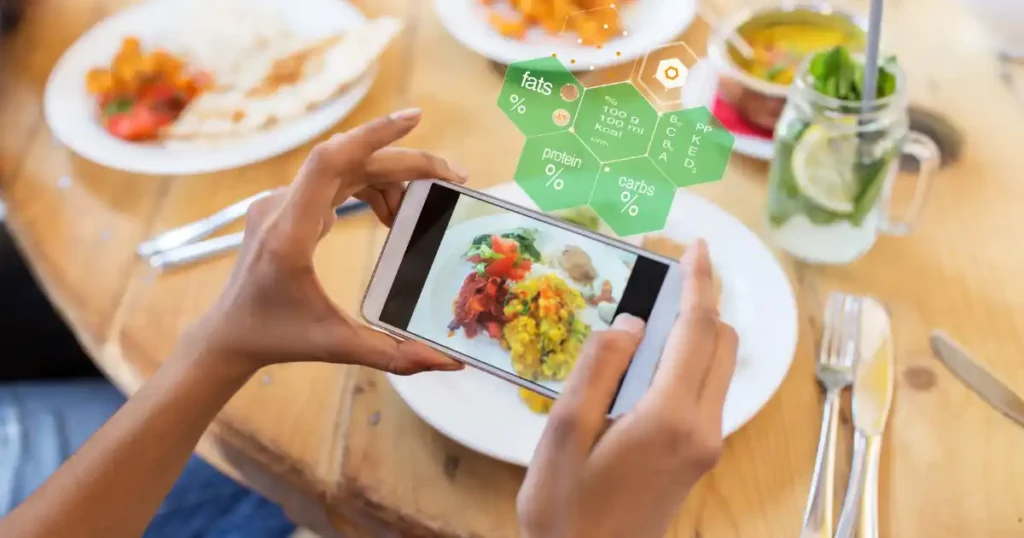
- Write or mentally note each component’s calorie value as the order is built, or use the Chipotle official nutrition calculator on the website to input each ingredient
- Sum the component calories for the complete meal total. Cross-reference with your daily calorie budget to assess whether the meal fits, needs adjustment, or can include additional items.
Calorie Breakdown of Common Chipotle Ingredients
Having the individual ingredient calorie values memorized or accessible is what makes it possible to calculate calories in Chipotle meals in real time at the ordering line.
Table 1: Chipotle Ingredient Calories (Approximate)
These values are based on Chipotle’s publicly available nutrition information. Actual servings may vary slightly in-store depending on the individual employee’s portion. The FDA allows a 20% variation from labeled calorie counts for restaurant food; in-store portion variation means real calorie totals may differ by 5-15% from these estimates.
| Ingredient | Calories (per serving) | Key Notes |
| White Rice | ~210 calories | Standard serving; biggest carbohydrate source in the bowl |
| Brown Rice | ~210 calories | Same calories as white; slightly more fiber |
| Black Beans | ~130 calories | Good protein and fiber; lower calorie than pinto |
| Pinto Beans | ~130 calories | Similar to black beans in calories and nutrition |
| Chicken | ~180 calories | Lean protein option; ~32g protein per serving |
| Steak | ~250 calories | Higher fat than chicken; still a good protein source |
| Barbacoa | ~170 calories | Lean and flavorful; similar calories to chicken |
| Sofritas (tofu) | ~150 calories | Plant-based option; moderate protein |
| Cheese | ~110 calories | Adds fat and calories quickly; easy to skip |
| Sour Cream | ~120 calories | High fat; 120 calories for a modest portion |
| Guacamole | ~230 calories | Healthy fat but highest single-topping calorie count |
| Salsa (fresh tomato) | ~25 calories | Best value topping: nearly calorie-free with good flavor |
| Fajita vegetables | ~25 calories | Free add-on in terms of calorie impact; adds volume |
| Lettuce | ~5 calories | Essentially zero calories; adds crunch and volume |
Why Ingredients Matter More Than the Meal Type
The same bowl can vary by 500 or more calories based on topping choices alone:
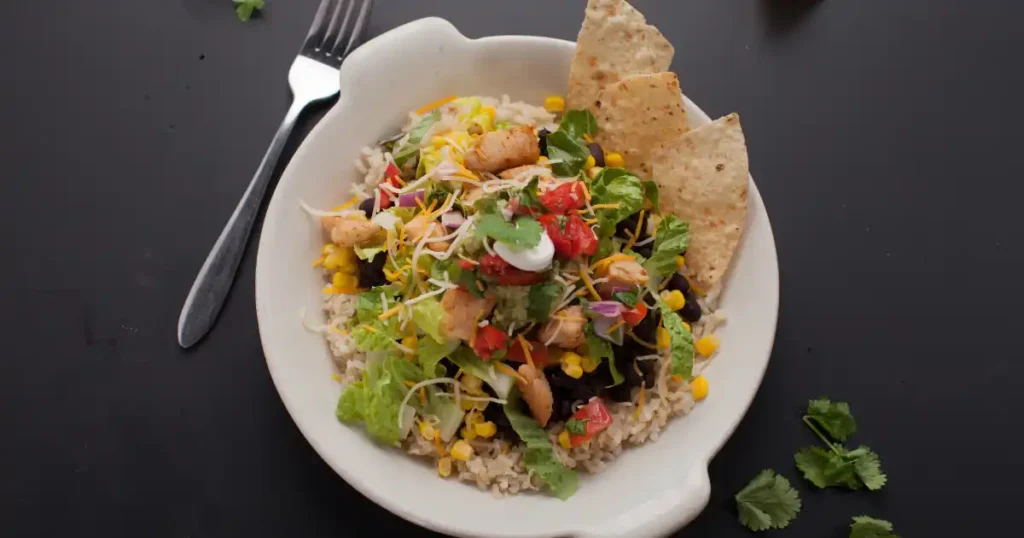
- A chicken bowl with rice, beans, salsa, and fajita vegetables: approximately 565 calories
- The same chicken bowl with rice, beans, cheese, sour cream, and guacamole instead of salsa and fajita vegetables: approximately 950 calories
- The difference is 385 calories from topping substitutions alone — not from ordering a different meal type or a different protein
Portion Variability in Real Life
One of the most important caveats for anyone who wants to calculate calories in Chipotle meals accurately:
- Serving sizes can vary slightly in-store: Chipotle employees serve by visual estimation, not by weight scale. A generous employee may serve 15-20% more rice than a precise one. The official nutrition values are based on standardized portions that may not perfectly match what lands in the bowl on any given visit.
- The practical implication: treat Chipotle calorie calculations as reliable estimates within a range of approximately plus or minus 100-150 calories, not as precise laboratory measurements
Example: Calculating a Chipotle Bowl
Walking through a real example makes the calculate calories in Chipotle process concrete and immediately applicable.
Table 2: Sample Bowl Calculation
This example reflects one of the most common Chipotle orders — a chicken bowl with rice, beans, cheese, and guacamole. The total illustrates how a standard-seeming healthy meal can reach 860 calories from five ingredients.
| Item | Calories |
| White rice | ~210 calories |
| Chicken | ~180 calories |
| Black beans | ~130 calories |
| Cheese | ~110 calories |
| Guacamole | ~230 calories |
| Total | ~860 calories |
Why This Bowl Is Moderate in Calories
At 860 calories, this bowl is moderate for an adult with a maintenance intake of 2,000-2,400 calories:
- It is balanced: protein from chicken, carbohydrates from rice and beans, fiber from beans, and healthy fat from guacamole. The macronutrient profile is reasonable.
- The guacamole at 230 calories is the largest single calorie contribution from toppings — but it is also delivering monounsaturated fat, potassium, and fiber alongside those calories. It is a nutritionally justified addition.
How It Can Increase Quickly
This same bowl grows significantly with two additions:
- Adding sour cream: plus 120 calories, making the total 980
- Adding cheese to the current cheese and changing to extra cheese: plus approximately 55-60 more calories
- Choosing a burrito instead of a bowl: plus 320 calories from the tortilla alone, making the same contents approximately 1,180 calories
How to Build a Low-Calorie Chipotle Meal
Knowing how to calculate calories in Chipotle meals also means knowing how to reduce them strategically without sacrificing the experience of eating there.
Choose a Bowl or Salad
The base choice is the highest-leverage decision in the meal:
- Avoid tortillas to save calories: choosing a bowl over a burrito saves 320 calories from the flour tortilla — more than the guacamole costs and significantly more than any single topping saving
- A salad base saves even more: using lettuce as the base instead of rice and beans can save 300-340 calories versus rice and beans together, though the meal is meaningfully lower in carbohydrates and fiber
Skip or Limit High-Calorie Toppings
The three high-calorie toppings are where the most effective reductions happen:
- Skip cheese: saves 110 calories with minimal flavor impact. Fresh salsa provides flavor without the calorie cost.
- Skip sour cream: saves 120 calories. Greek yogurt can be requested from some locations as a substitute at lower calorie and higher protein content.
- Skip or share guacamole: saves 230 calories. If guacamole is important, request a half portion — some locations will accommodate.
- Skipping all three together saves 460 calories and produces a bowl that is still flavorful and complete.
Focus on Lean Protein
Among proteins, the calorie differences are meaningful:
- Chicken (180 calories) versus steak (250 calories): a 70-calorie difference per serving. Over multiple visits per week, choosing chicken over steak consistently produces meaningful weekly calorie savings with identical protein contribution.
- Barbacoa at 170 calories is an even lower-calorie option with excellent flavor — an underappreciated calorie-efficient choice for people building low-calorie Chipotle meals.
How to Build a High-Protein Chipotle Meal
Chipotle is genuinely excellent for high-protein meal building, and understanding how to calculate calories in Chipotle enables intentional high-protein ordering without excessive calorie addition.
Double Protein Strategy
Doubling protein at Chipotle is one of the most effective high-protein dining strategies available at any fast-casual restaurant:
- Add extra chicken or steak: a double chicken order provides approximately 64 grams of protein (from two standard chicken servings at roughly 32g each) at approximately 360 calories from protein alone
- The double protein option typically costs approximately two dollars more than a single protein serving but produces a meal with protein content comparable to dedicated high-protein meal prep
Combine Protein with Fiber
Fiber from beans significantly improves the satiety of a high-protein Chipotle meal:
- Beans improve fullness: the 7.5 grams of fiber per serving of black or pinto beans slows digestion and extends the satiety window of the high-protein meal
- The combination of 40-60 grams of protein from double meat alongside 7-15 grams of fiber from beans produces a meal that manages hunger for four or more hours — making it ideal for managing daily calorie intake on active training days
Keep Calories Balanced
High-protein ordering does not require high-calorie additions:
- Avoid excessive high-fat toppings on a protein-focused meal: the goal is high protein at a controlled calorie total. Cheese, sour cream, and guacamole all add significant calories without adding protein, which dilutes the protein-per-calorie efficiency of the meal.
- A double chicken bowl with black beans, salsa, fajita vegetables, and lettuce provides approximately 500-550 calories with 60+ grams of protein — an exceptional protein-to-calorie ratio for a fast-casual meal
Tools to Calculate Chipotle Calories Easily
Beyond manual calculation, several tools make it faster and more accurate to calculate calories in Chipotle meals before or during the ordering process.
Official Chipotle Nutrition Calculator
The most accurate tool for Chipotle calorie calculation is Chipotle’s own:
- Available on the Chipotle website at chipotle.com/nutrition: the tool allows selection of each menu item with its ingredients, and the calculator updates in real time as ingredients are added or removed
- This calculator uses Chipotle’s official serving size data and is updated when menu items change. It is the most reliable reference for accurate Chipotle nutrition information.
Mobile Apps for Tracking
Two major tracking apps have comprehensive Chipotle ingredient databases:
- MyFitnessPal: contains individual Chipotle ingredients as well as full meal entries. Searching ‘Chipotle chicken bowl’ produces multiple community-submitted entries; for greatest accuracy, build the meal from individual ingredients rather than using a pre-built meal entry.
- Lose It!: similarly comprehensive database with individual ingredient entries. The barcode scanner does not apply to Chipotle (no barcoded products), but the text search for individual ingredients works well.
Why Digital Tools Help
Using digital tools to calculate calories in Chipotle meals before ordering provides a specific behavioral benefit:
- They reduce guesswork and save time: the alternative to using the calculator is estimating total calories from memory, which consistently produces underestimates for calorie-dense items like guacamole and cheese
- Pre-logging before ordering allows the order to be adjusted before it is placed — not after it is already in the bowl and being wrapped
Expert Advice on Eating Out and Calories
The professional consensus on managing calories at restaurants like Chipotle emphasizes awareness and planning over restriction.
‘When eating out, awareness of portions and ingredients is more important than strict calorie counting,’ says Keri Gans, MS, RDN, registered dietitian nutritionist and author of The Small Change Diet. ‘Chipotle is actually one of my favorite examples to give clients, because the ingredient-by-ingredient format makes it possible to calculate a reasonable meal estimate before you even order. The best strategy is knowing approximately what you are getting, choosing the elements that serve your goals, and not stressing about a 50-calorie variance in either direction.’
Guidance From U.S. Nutrition Experts
Evidence-based nutrition guidance on restaurant eating consistently emphasizes the same approach:
- Flexible dieting improves adherence: treating restaurant meals as manageable within a weekly calorie budget, rather than as diet emergencies, produces significantly better long-term dietary consistency
- Awareness without perfectionism is the target: knowing approximately how many calories are in the Chipotle meal and planning the day’s other meals accordingly is a more sustainable strategy than either avoiding Chipotle or not considering its calorie content at all
Practical Tip From Coaches
The most effective single habit for managing calories at Chipotle:
- Plan your meal before ordering: open the Chipotle nutrition calculator or a tracking app while waiting in line or before leaving for the restaurant. Decide what you will order before reaching the counter.
- Pre-decision eliminates the in-the-moment impulse additions (extra guacamole, sour cream, cheese) that most commonly elevate Chipotle calorie totals beyond intended levels
Common Mistakes When Calculating Chipotle Calories
Even people who consistently track calories make specific errors when estimating Chipotle totals.
Forgetting Add-ons
The most common error in trying to calculate calories in Chipotle orders:
- Extras like sauces add hidden calories: hot sauce adds minimal calories, but vinaigrette adds approximately 270 calories and is commonly added to salad orders without tracking
- Chips are a major calorie addition: a medium serving of Chipotle chips is approximately 540 calories. Adding chips to a 600-calorie bowl more than doubles the total. Chips are often treated as a minor addition when they represent a major calorie contribution.
Ignoring Portion Sizes
In-store portion variation is real and creates systematic tracking errors:
- Serving sizes may vary slightly: rice in particular tends to vary by employee. A generous rice serving might be 280 calories rather than the standard 210 calories.
- The standard practice from a tracking standpoint: use official Chipotle nutrition values as the baseline, and add 100-150 calories as a buffer if concerned about portion generosity
Assuming Healthy Means Low-Calorie
The healthy food exception applies directly to several popular Chipotle choices:
- Healthy foods can still be calorie-dense: guacamole is nutritionally excellent and 230 calories per serving. Brown rice is nutritionally equivalent to white rice and the same 210 calories. A salad with vinaigrette is approximately 270 calories from the dressing alone before any other ingredient is counted.
- The health quality of Chipotle ingredients does not change their calorie contribution. Calculating calories in Chipotle meals requires counting every ingredient regardless of how healthy it is.
Real-Life Strategy: Calorie Budgeting at Chipotle
Managing a Chipotle meal within a daily calorie budget is straightforward with a few specific planning steps.
Adjust Other Meals
Anticipating a Chipotle meal and planning the rest of the day accordingly is the most practical strategy:
- Eat lighter earlier in the day: if a 700-800 calorie Chipotle bowl is planned for lunch, breakfast might be 300-350 calories rather than 500. The daily total stays within budget without requiring the Chipotle meal to be stripped of everything enjoyable.
- This approach applies to any higher-calorie occasion: the weekly budget absorbs the meal without requiring daily restriction if the surrounding meals are planned accordingly
Pre-Log Your Meal
Pre-logging is one of the most consistently effective behavioral interventions for calorie management at restaurants:
- Track calories before ordering: use the Chipotle website calculator or a tracking app to build the intended order before placing it. See the calorie total before committing.
- If the pre-logged total is higher than intended, remove one item — typically a topping — rather than restructuring the entire order. Removing guacamole (230 calories) while keeping everything else adjusts the total meaningfully with a single decision.
Stay Flexible
The purpose of knowing how to calculate calories in Chipotle is to enable informed choice, not to restrict enjoyment:
- Enjoy your meal without guilt: the person who pre-logs, adjusts slightly, and eats a 780-calorie bowl without stress is more nutritionally successful long-term than the person who avoids Chipotle out of fear or eats there without any awareness and consumes 1,200 calories unexpectedly
- One Chipotle meal, accurately understood and managed within a weekly budget, has no meaningful negative impact on fat loss or health. Context and consistency are what matter.
The Psychology of Eating Out and Tracking Calories
How you think about restaurant meals like Chipotle is as important as the calorie calculations themselves.
Avoid All-or-Nothing Thinking
The most common psychological error in restaurant calorie management:
- One meal does not ruin progress: a 900-calorie Chipotle bowl in a day where other meals total 900 calories is a 1,800-calorie day — appropriate for many adults. Even a 1,100-calorie Chipotle meal in an otherwise moderate day produces a calorie total that does not impair a week of fat loss progress.
- Treating a restaurant meal as a violation that triggers dietary abandonment is the behavior that actually impairs progress. The meal does not. The response to the meal does.
Enjoy Food Without Stress
Nutritional awareness and food enjoyment are not in conflict:
- Balance tracking with enjoyment: knowing approximately how many calories are in the meal allows ordering with confidence rather than anxiety. The goal of being able to calculate calories in Chipotle is not to reduce enjoyment — it is to replace guesswork with knowledge.
- People who successfully manage their weight long-term are not people who stop enjoying food. They are people who enjoy food with enough awareness to maintain appropriate calorie management across weeks and months.
Build Sustainable Habits
Consistent awareness produces compounding results:
- Consistency matters more than perfection: the person who makes moderately good Chipotle choices 80% of the time while maintaining overall dietary awareness will consistently outperform the person who makes perfect Chipotle choices for two weeks and then abandons nutrition management entirely
- The knowledge of how to calculate calories in Chipotle is a permanent skill. Once learned, it requires no additional effort to apply to every future visit.
Sample Chipotle Meal Builds by Goal
To make the ability to calculate calories in Chipotle meals immediately actionable, here are four complete meal builds for different calorie and nutrition goals.
Table 3: Chipotle Meal Builds by Goal
These builds are designed to give practical starting points for different dietary goals. Actual calories may vary slightly based on in-store portion variation. All are based on bowl format (no tortilla) for maximum calorie efficiency.
| Meal Goal | Recommended Build |
| Low-calorie (under 600 cal) | Bowl: half rice or no rice + chicken + black beans + fajita vegetables + salsa + lettuce |
| Moderate (600-800 cal) | Bowl: white rice + chicken + black beans + salsa + fajita vegetables + small guac |
| High-protein (30-50g protein) | Bowl: half rice + double chicken or chicken + steak + black beans + salsa |
| Higher calorie (muscle gain) | Bowl: white rice + double protein + black beans + cheese + guac + sour cream |
Final Thoughts on Calculating Chipotle Calories
Chipotle can be a 500-calorie meal or a 1,200-calorie meal. It can be a high-protein athlete’s lunch or a high-fat comfort food. The same ingredients, chosen differently, produce dramatically different nutritional outcomes. The ability to calculate calories in Chipotle meals accurately gives you control over which outcome you get.
The complete process is five steps: choose the base, choose the protein, choose the carbohydrates, choose the toppings, and add the total. The Chipotle nutrition calculator makes this calculation available in under a minute. The knowledge of which ingredients contribute most to calorie totals makes it even faster.
Once you understand how to calculate your Chipotle calories, you stop guessing and start ordering with confidence. The bowl becomes a planned, satisfying meal rather than a nutritional uncertainty.
Final Recommendation
After years of helping clients navigate restaurant meals and build sustainable nutrition habits, here is the practical guidance for calculating and managing Chipotle calories:
Use the Chipotle official nutrition calculator before ordering. Go to chipotle.com/nutrition and build your intended order before you arrive or while waiting in line. This takes less than two minutes and eliminates the surprise of not knowing the total.
Choose bowl over burrito as the default base. The 320-calorie savings from skipping the tortilla is the single highest-value calorie reduction available at Chipotle. The bowl contains the same filling ingredients with full flavor and no meaningful reduction in satisfaction.
Pick chicken or barbacoa as your protein. Both deliver high protein at the lowest calorie cost of any meat option. For a high-protein focus, double chicken provides approximately 64 grams of protein at approximately 360 protein calories.
Skip sour cream first if reducing calories. Sour cream at 120 calories provides the least nutritional value relative to its calorie cost of any standard Chipotle topping. Salsa at 25 calories replaces much of the moisture and flavor. This single substitution saves 95 calories with minimal eating experience impact.
Pre-log and plan surrounding meals. If the Chipotle meal will be 700-800 calories, adjust breakfast and dinner to keep the daily total within budget. The meal fits. Everything else adjusts around it. That is the core skill in how to calculate calories in Chipotle successfully as an ongoing practice.
Smart Ordering: How to Calculate Calories in Chipotle Meals Accurately
You can enjoy a fresh bowl without losing track of your goals. Here is how to calculate calories in Chipotle meals accurately for your next visit.
Use the online tool on their site first. It lets you add each item one by one. This is the best way to see the real total for your custom bowl.
Yes, a double scoop of rice adds a lot of fuel. Be sure to count every extra bit they give you. This is a key part of staying simple and smart with your plan.
The app has a built-in tool for your order. It updates the total as you pick your beans and meat. It makes how to calculate calories in Chipotle meals very fast.
Large wraps and side chips have the most energy. They can add over 800 units to your lunch. Pick a bowl with greens to keep your daily totals on track.
Every server scoops a bit differently. It is smart to add a small buffer to your count. This helps you reach your goals while you enjoy your favorite food.

Dr. Selim Yusuf, MD, PhD
Founder & Chief Medical Editor, Maintenance Calorie Calculator Expertise: Clinical Nutrition, Metabolic Health, and Exercise Physiology
Experience: 15+ Years of Practical & Clinical Experience
Dr. Selim Yusuf is a licensed physician, clinical research scientist, and dedicated metabolic health expert with over 15 years of practical experience diagnosing, managing, and treating health and nutritional issues. As the founder and chief medical editor of Maintenance Calorie Calculator, Dr. Yusuf combines a rigorous academic background with years of frontline clinical experience to provide evidence-based, highly accessible nutritional tools for the public.
Dr. Yusuf earned his Doctor of Medicine (MD) from the Johns Hopkins University School of Medicine, where he graduated with honors and developed a deep interest in preventive medicine and metabolic health disorders. Following his medical residency, he pursued advanced academic research, earning a PhD in Nutritional Sciences and Metabolism from Harvard University.
His academic and clinical training uniquely bridges the gap between complex biochemical pathways (how the human body extracts energy from food) and practical, everyday clinical care. Over the course of his 15-year career, he has authored multiple peer-reviewed research papers focusing on the management of obesity, metabolic adaptation during prolonged calorie restriction, and macronutrient optimization for lean mass preservation.
Before transitioning his focus to digital health utility platforms, Dr. Yusuf served as an administrative lead and consulting metabolic specialist within top-tier university medical centers. Beyond his institutional roles, he has worked extensively as an elite evidence-based fitness and metabolic coach, guiding hundreds of individuals, ranging from sedentary desk workers battling chronic metabolic slowdowns to competitive athletes looking to optimize body composition.
Throughout his 15 years of practice, Dr. Yusuf noticed a recurring barrier to sustainable patient success: the mathematical confusion surrounding daily nutrition. He observed that most individuals fail to reach their physical goals not from a lack of effort, but because they lack a precise biological baseline.